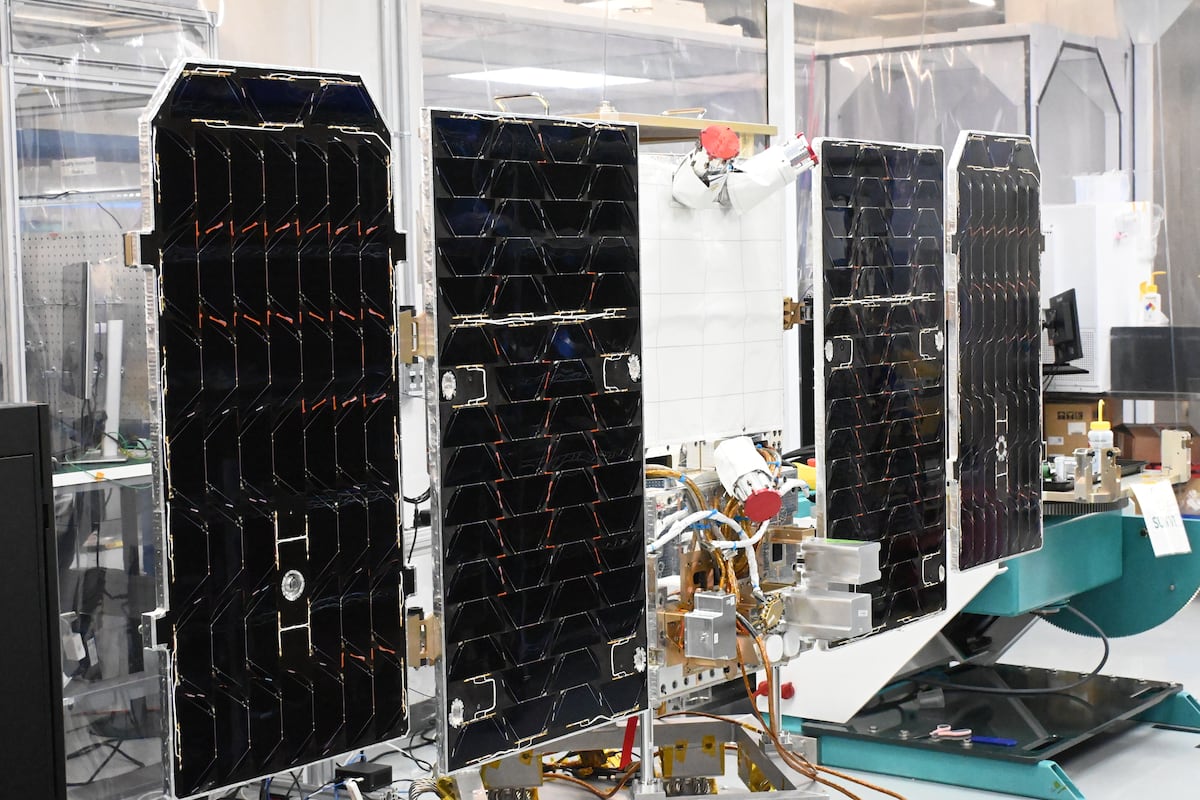
Google’s space-based AI experiment has reached a new milestone: the company says its first tensor processing units in orbit have completed an AI workload. A Gemma 4 model running on a Project Suncatcher prototype generated a short haiku about space and sent the result back to Earth. The satellite launched on October 1, 2026, but this remains a limited research test — not a functioning commercial data center.
The idea sounds futuristic: put AI computing hardware in orbit, use abundant sunlight for power and connect satellites into a network. But the economics are a major question. The Information reported that Google’s energy chief said space data centers could cost up to 100 times more than comparable facilities on Earth — a warning that makes clear this is still an expensive research project, not a replacement for terrestrial data centers.
What Project Suncatcher is testing in orbit

Google built the prototype with satellite-imaging company Planet and launched it aboard SpaceX’s Transporter-18 rideshare mission. The spacecraft carries four TPUs and has about one kilowatt of solar power. Yahoo Finance reports the prototype can run one chip at a time for roughly 20 minutes per session, which shows how far the experiment is from the scale of an Earth-based AI campus.
The satellite is a technology demonstrator, not a commercial data center. Google’s own description calls Project Suncatcher a long-term research moonshot. The first AI workload is a proof that a data-center-class TPU can process a small task in orbit; it does not demonstrate that a constellation can train or serve large AI models at commercial scale.
That distinction matters because the launch does not mean Google is ready to move customer workloads off the ground. The first mission is about testing hardware and communications in a difficult environment. A commercial system would require a much larger network, dependable data links and a way to service or replace equipment that cannot be reached like a normal server rack.
Why the cost could be dramatically higher

TechRadar reported that Google’s energy chief Amanda Peterson Corio estimated orbital data centers could cost up to 100 times more than terrestrial facilities. That figure is an estimate reported by TechRadar, not a published Google budget or a confirmed price for a future service. It should be treated as a warning about the economics rather than a final price tag.
Launching hardware into orbit is expensive, and the system would need specialized protection against radiation, extreme temperature swings and the risks of space debris. Even if solar power is available, power generation is only one part of the equation. Cooling, communication, reliability, manufacturing and replacement all have to work at scale.
Earth-based data centers also benefit from established supply chains, repair crews, grid connections and fiber networks. A satellite network would need to compete with infrastructure that is already improving rapidly on the ground. Space may offer advantages in some areas, but it does not remove the practical costs of running computers.
Could space ever become a serious home for AI computing?

Google’s argument is that solar-powered satellites could eventually access more consistent sunlight than ground-based facilities and reduce some land and energy constraints. The next milestone is a planned test of two interconnected satellites in 2027, with a longer-term concept that could connect dozens of spacecraft into a computing cluster. That is still a research plan, not an announced service.
But a working prototype is only the first step. The company still needs to prove that chips can operate reliably in orbit, that data can move between satellites quickly enough for useful AI workloads, and that the total cost can become competitive with terrestrial systems. It also needs to address orbital debris and the environmental cost of frequent launches.
For now, Project Suncatcher is best understood as an experiment that could inform future infrastructure. It is not a product announcement, and there is no confirmed timetable for a commercial orbital data center. The cost warning suggests Google itself knows that the engineering challenge is only half the problem.
The prototype’s successful launch is an important research milestone, but it does not make space-based AI computing inevitable. Google has shown that it can put a test satellite in orbit; the harder question is whether it can make the technology reliable and affordable enough to matter on Earth.
Sources and further reading
- Google: First response from the Project Suncatcher prototype satellite
- Google: Project Suncatcher research moonshot
- TechRadar: Google energy chief says orbital data centers could cost up to 100 times more
- Data Center Dynamics: Google’s orbital TPU runs its first AI workload
- TechCrunch: Google’s first data center satellite is online and writing poetry
Related reading



Leave a Reply