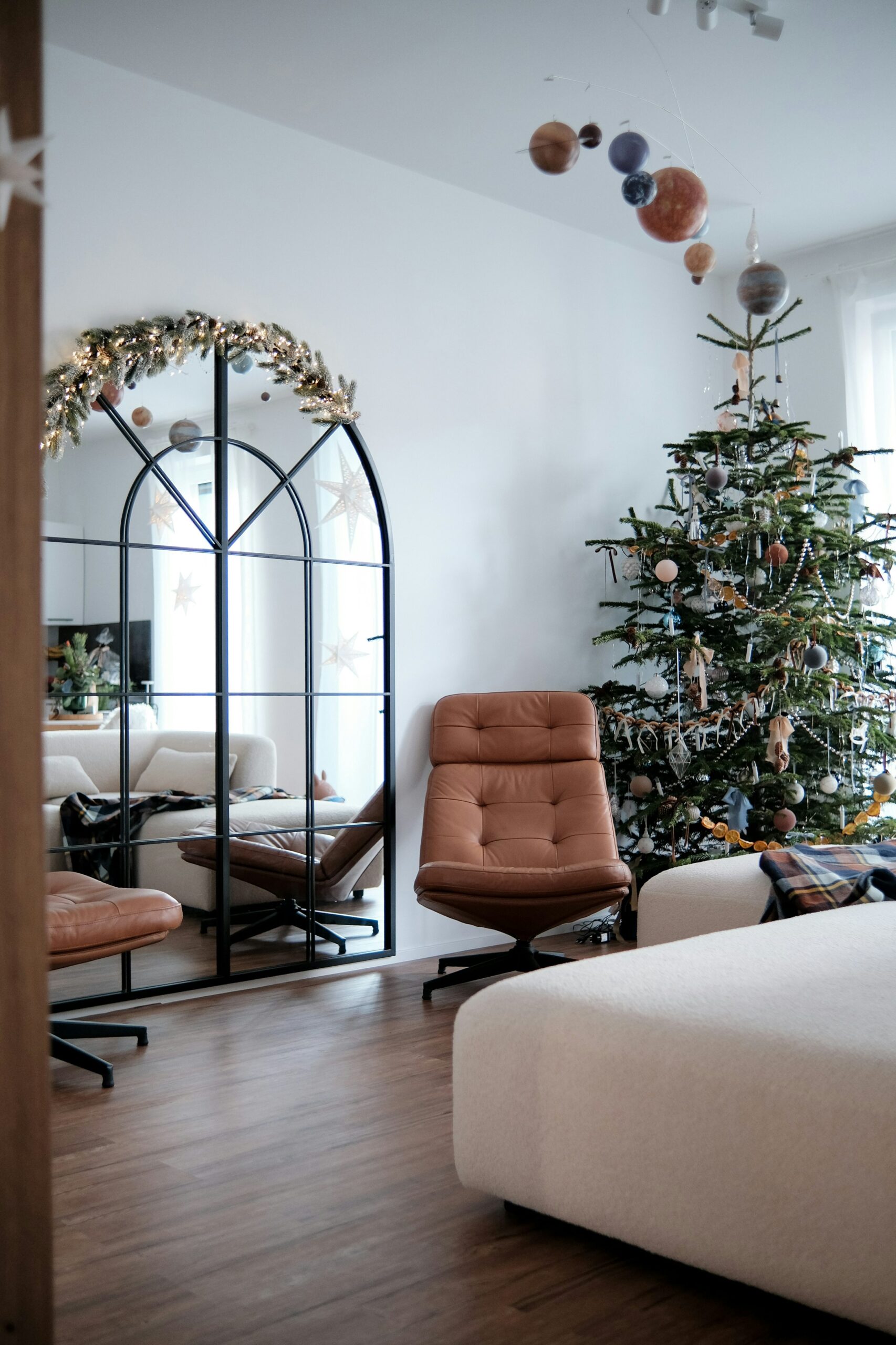
Start by changing the layout

Before shopping, look at how people move through the room. Keep the main walkway clear, avoid blocking windows and arrange seating so conversation feels natural. Pulling furniture slightly away from the wall can sometimes make a room feel more intentional, but only if it does not crowd the space.
If the room serves several purposes, use a rug, lamp or small side table to define the seating area. A clear focal point—such as a window, artwork or fireplace—helps the room feel organized.
Use lighting in layers

One bright overhead light can make a room feel flat. Combine ambient lighting with a floor lamp, table lamp or task light. Warm-white bulbs can create a softer evening atmosphere; check the bulb packaging for color temperature and brightness rather than relying only on the word warm.
Place lamps where people read, relax or gather. Avoid glare on televisions and computer screens, and use dimmers when compatible with the fixture.
Add texture instead of clutter

A throw, cushion covers, curtains or a textured rug can change the feel of a room without replacing major furniture. Choose a limited palette and repeat a few materials—such as wood, cotton, wool or woven fibers—to create cohesion.
Edit surfaces before adding décor. A tray can group small objects, while one larger plant or artwork can make a stronger statement than many tiny accessories.
Spend where it makes a difference
Prioritize items you touch or use every day: comfortable lighting, a supportive cushion, curtains that fit and storage that reduces visual clutter. Measure before buying rugs or furniture, and check return policies for items whose color or scale may look different at home.
A refresh does not require a shopping spree. Rearranging existing furniture, cleaning windows, changing a lampshade and editing accessories can make a noticeable difference.
The takeaway
A warmer living room is usually the result of better choices, not more stuff. Improve the layout, soften the lighting and introduce texture gradually.
Sources and further reading
ENERGY STAR guide to light bulbs




Leave a Reply