Updated November 13, 2026 — Air travel across the United States was thrown into an extraordinary disruption Friday after the Federal Aviation Administration (FAA) ordered all departing flights to remain on the ground. The agency cited a communications problem affecting the nation’s Air Route Traffic Control Centers and said technicians were investigating.
The order is a nationwide ground stop, not an instruction for every aircraft already in the sky to make an emergency landing. Flights that were airborne could continue toward landing, while departures were held until the FAA could safely manage traffic again. International arrivals were to be handled case by case, according to the agency’s advisory and reporting by Reuters.
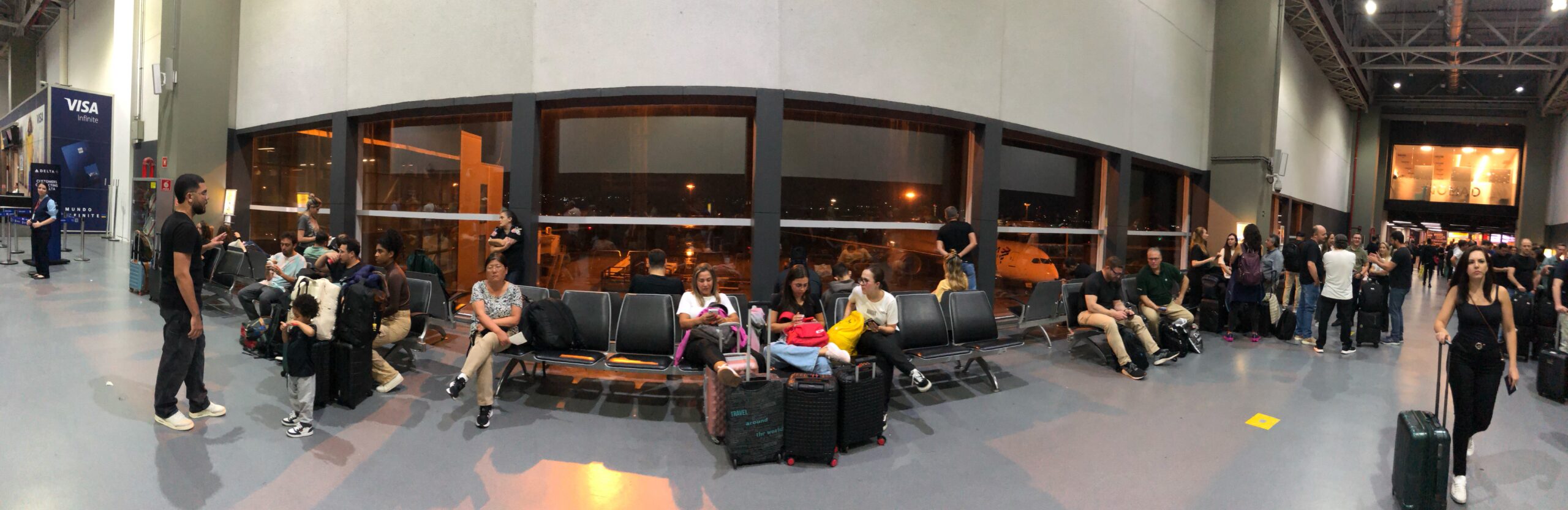
For passengers, the immediate concern is missed connections, canceled departures and delays that may continue even after restrictions are lifted. Here is what is known about the FAA nationwide ground stop, why communications matter so much to aviation safety, and what travelers should do next.
What happened in the FAA nationwide ground stop?

The FAA’s advisory instructed departing traffic at U.S. airports to remain ground-stopped “until further notice,” describing the measure as necessary because of extraordinary circumstances and safety concerns. Transportation Secretary Sean Duffy said the communications issue was affecting all Air Route Traffic Control Centers and that FAA technicians were investigating.
Those centers coordinate aircraft traveling between airports. A problem affecting communications across the network can therefore disrupt flights far beyond the airport where an issue is first detected. The FAA’s decision was intended to prevent additional aircraft from departing while controllers assessed whether normal operations could be conducted safely.
The scale of the disruption grew quickly. Flight-tracking service FlightAware reported that nearly 7,000 flights had been delayed or canceled amid the ground stop, according to Reuters. That figure combines delays and cancellations; it does not mean that 7,000 flights were all canceled.
The impact reached major travel hubs around the country. In Texas, the Houston Chronicle reported that both George Bush Intercontinental Airport (IAH) and William P. Hobby Airport (HOU) were affected. Airports and airlines urged passengers to check individual flight updates rather than assume a scheduled departure would operate as planned.
Why an air traffic control communications failure can stop takeoffs

Air traffic control is a connected safety system. Controllers communicate with pilots, coordinate handoffs between facilities, monitor aircraft movement and maintain safe separation as planes travel through crowded airspace. If the communications tools needed to perform those tasks become unreliable, controllers may have to reduce or stop departures rather than introduce more aircraft into a system they cannot confidently manage.
The FAA has not publicly identified the precise technical cause of Friday’s communications failure in the reporting available at publication. Officials have not established that it was caused by a cyberattack, a software update or any particular vendor. Those explanations should not be treated as fact unless investigators confirm them.
A rare nationwide halt — but not the first major FAA outage
Reuters described Friday’s action as the second nationwide ground stop of all departing flights since the September 11, 2001 attacks. The previous comparable shutdown came in January 2023, when an FAA Notice to Air Missions (NOTAM) system failure temporarily halted domestic departures. The systems involved in the two incidents were different: the 2023 disruption involved the pilot-notification system, while Friday’s incident involved air traffic control communications.
The latest incident also arrives as the government works to replace aging aviation technology. In a report published September 14, 2026, the U.S. Government Accountability Office (GAO) said the FAA’s modernization program is intended to upgrade communications, surveillance, weather and training systems. Congress appropriated $12.5 billion for the first phase, which the FAA plans to complete by December 2028. The GAO also warned that the FAA lacked a comprehensive lifecycle cost estimate and an integrated master schedule for the program.
The GAO report provides important context about the challenges facing the air traffic control network, but it does not establish that aging equipment caused Friday’s specific outage. That determination depends on the FAA’s technical investigation.
What travelers should do while airlines work through the disruption

Even after a ground stop is lifted, normal schedules may take time to recover. Aircraft and crews can end up in different cities than planned, passengers may miss connecting flights, and airlines may need to rebuild departure sequences. That means delays can continue after the original safety restriction changes.
Five practical steps for passengers
- Check your airline’s app or website. Confirm the status of your specific flight before leaving for the airport or changing your plans.
- Watch for connection changes. A delayed first leg can affect later flights, even if the connecting flight still appears on schedule.
- Do not assume a delay means a cancellation. Wait for an official airline update and follow instructions from airport and airline staff.
- Keep receipts for extra expenses. Save records of meals, hotels and transportation, then review the airline’s policy and any applicable passenger protections.
- Follow official updates. Check the FAA’s National Airspace System Status page and your airport’s official channels for operational changes.
Travelers flying through Houston should also monitor updates from their airline and the Houston Airport System, especially if departing from Bush Intercontinental or Hobby. The same advice applies at other major airports: local terminal activity does not necessarily mean a particular flight has clearance to depart.
The bottom line: Friday’s nationwide ground stop shows how a failure in one critical part of the aviation network can affect passengers across the country. The priority is restoring dependable communications and safe operations—not simply getting planes moving as quickly as possible. The FAA’s investigation should clarify what failed and what steps are needed to prevent another disruption of this scale. The Immortal Times will update this report as verified information becomes available.
Sources and further reporting
- Reuters: U.S. grounds flights nationwide after air traffic control communications outage
- Associated Press: Flights halted at airports across the U.S. due to air traffic control communications problems
- Houston Chronicle: Houston Bush and Hobby airport flights affected
- U.S. Government Accountability Office: Air Traffic Control Systems modernization report, September 2026
- Federal Aviation Administration: National Airspace System Status




Leave a Reply