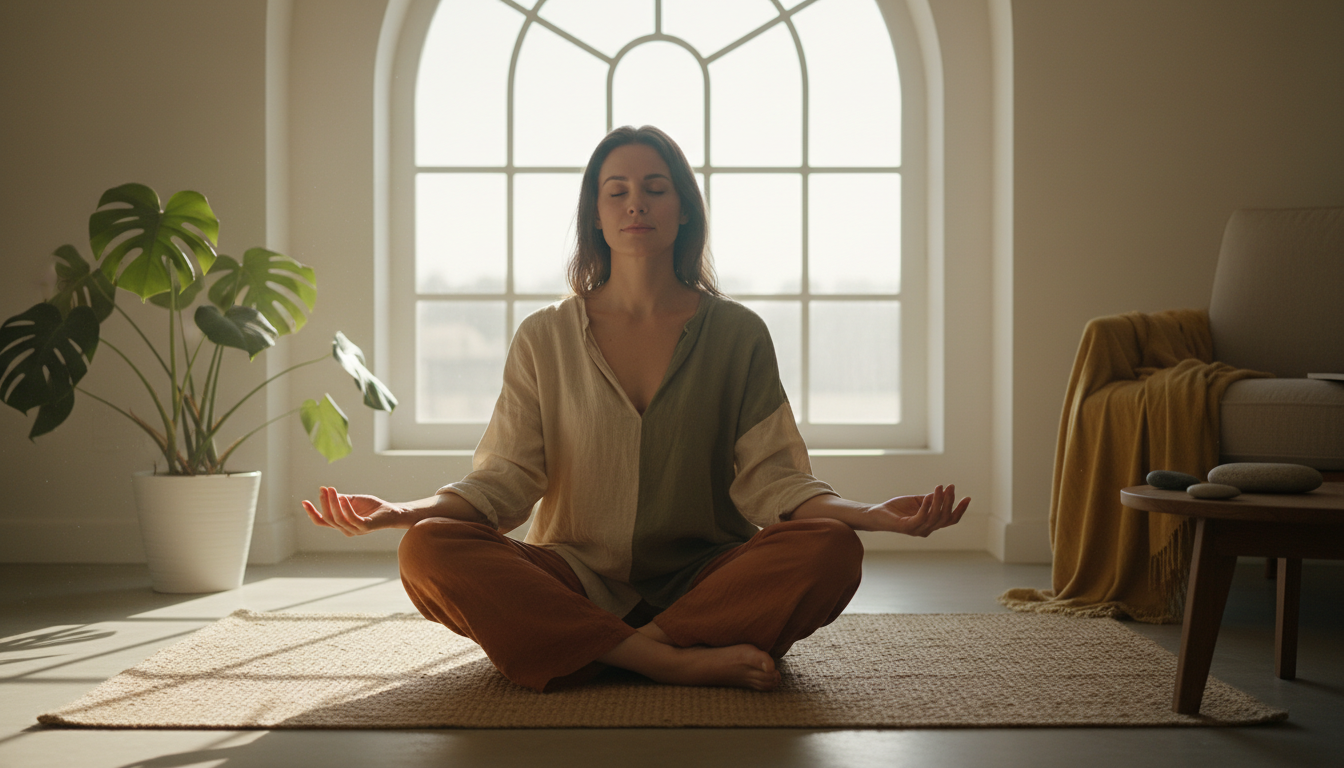
Mindfulness is often described as a way to slow down, pay attention and respond to the present moment with less automatic judgment. It appears in spiritual traditions, meditation programs and modern wellness advice. But does it make a measurable difference to stress? A 2026 systematic review and meta-analysis offers encouraging evidence, while also showing why the results should be interpreted carefully.
What the 2026 research found

The review, published in npj Mental Health Research on February 3, examined 17 randomized controlled trials involving 1,641 adults who were not being treated as clinical populations. Across the included studies, people who took part in mindfulness-based interventions reported lower perceived stress after the programs than people in comparison groups.
The authors reported a pooled standardized mean difference of -0.53 between intervention and control groups after treatment, a statistically significant result. In everyday terms, the combined evidence suggests mindfulness programs can help some adults feel less overwhelmed by stress.
What mindfulness practice can look like

Mindfulness does not have to mean sitting in silence for an hour. Programs may include guided breathing, body-awareness exercises, mindful movement or short practices that bring attention back to what is happening now. A simple starting exercise is to sit comfortably, notice the natural rhythm of breathing and gently return attention whenever the mind wanders.
The goal is not to force thoughts to disappear. It is to notice thoughts and sensations without immediately reacting to each one. Some people connect this practice to spiritual reflection; others approach it as a practical attention and stress-management skill.
The findings have limits

The review found substantial variation between studies, meaning the size of the benefit was not identical across programs and participants. The research measured perceived stress, not every possible health outcome. It also does not establish that mindfulness works equally well for everyone or that a short exercise can replace professional care.
If meditation feels uncomfortable or increases distress, it is reasonable to stop and try another approach. People dealing with persistent or severe anxiety, depression or other mental-health concerns should consider speaking with a qualified health professional.
A realistic way to try it

- Start with a few minutes rather than setting an ambitious daily target.
- Use a quiet, comfortable place where you can focus without pressure.
- Try breathing, a body scan or mindful walking and notice which feels useful.
- Practice consistently for a period of time instead of judging the result after one session.
- Keep other helpful supports, such as sleep, movement, social connection and professional care, in the picture.
The research does not make mindfulness a miracle cure. It does support a more measured conclusion: structured mindfulness programs can reduce perceived stress for many adults, and a modest, manageable practice may be worth exploring if it suits you.
Research source

Rajan, A., Kumar, M. and Raj P, P. (2026). Effects of mindfulness-based interventions on perceived stress among non-clinical adults: a systematic review and meta-analysis. npj Mental Health Research.
Related Reading




Leave a Reply