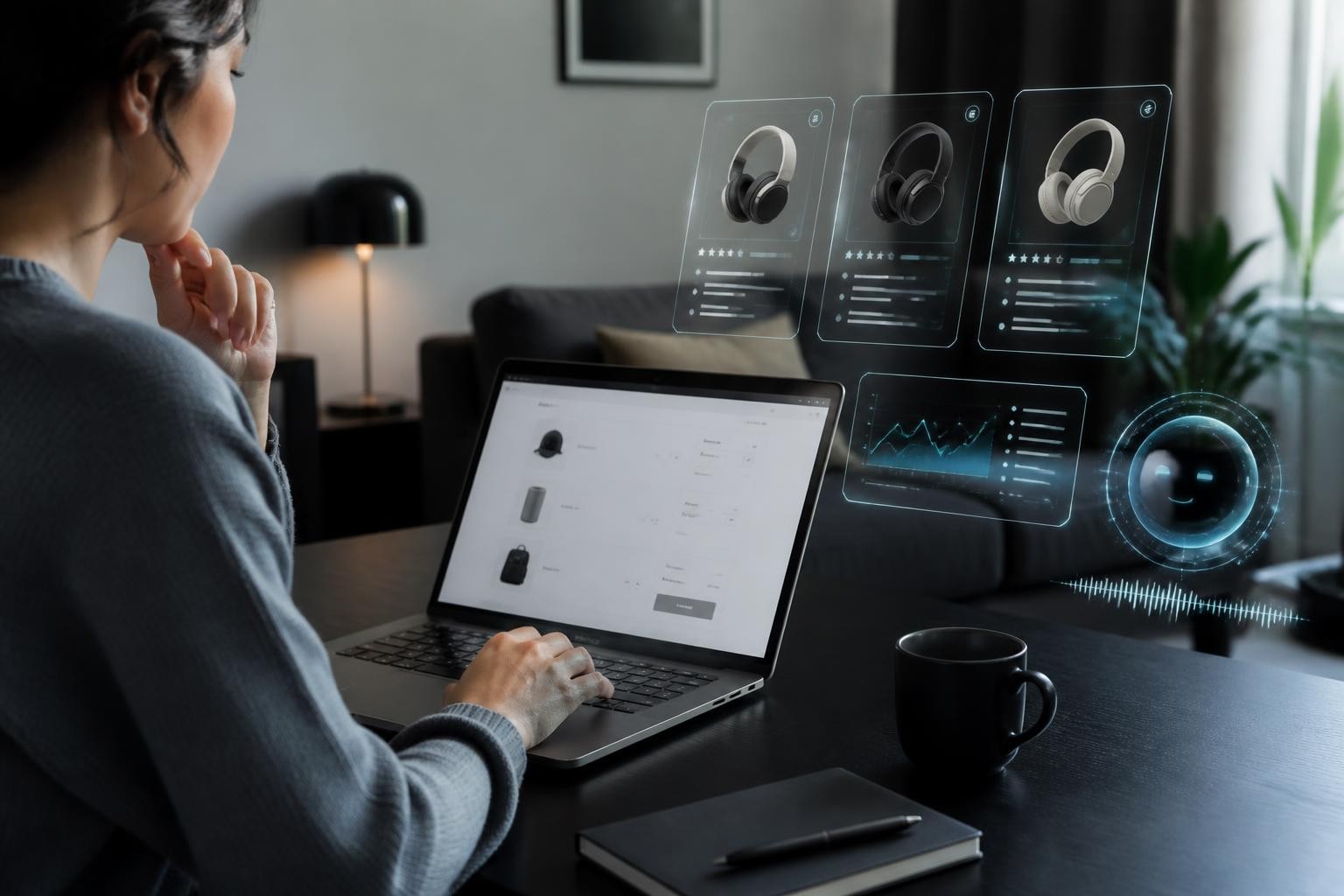
Online reviews can make shopping easier, especially when you cannot inspect a product in person. But a page filled with glowing ratings does not automatically mean a product is reliable. Reviews can be misleading, manipulated, incentivized, outdated, or written by people who never used the item. Learning how to evaluate the pattern—not just the star average—can help you make a more informed decision.
Why the star rating is not enough

A four- or five-star average is only a summary. It does not tell you whether reviewers bought the product, whether the comments are current, whether the sample is representative, or whether negative feedback has been hidden. A product with a slightly lower average may have more detailed and useful reviews than one with a perfect score and dozens of vague comments.
Think of reviews as evidence to examine, not a verdict to accept. Your goal is to find consistent details across multiple sources and decide whether the product fits your own needs.
10 warning signs worth checking

1. A sudden burst of similar reviews
Be cautious when a product receives a large cluster of highly positive reviews within a short period, especially if the language and details look alike. A launch or sale can naturally create a review spike, so timing alone does not prove manipulation. Treat it as a reason to investigate further.
2. Repeated wording across different accounts
Look for phrases that appear nearly identical across multiple reviews. Genuine customers can use similar language, particularly for simple products, but repeated scripts, identical claims, or the same unusual phrasing deserve a closer look.
3. Praise without useful details
Comments such as “Amazing product!” or “Best ever!” provide little information. More useful reviews explain how the item was used, what worked, what did not, and who might benefit from it. A short review is not automatically fake; it is simply less informative.
4. Reviews that do not match the product
Check whether the comment describes the correct model, size, color, version, or service. On listings where sellers combine several variations, reviews for one version may appear beside another. A review about a different item should not influence your decision.
5. Extreme praise or criticism with no explanation
Both five-star praise and one-star complaints can be useful, but emotional language without specifics tells you little. Look for concrete details: what happened, when it happened, how the product was used, and whether the reviewer explains the problem.
6. A suspiciously perfect rating pattern
A product with almost no mixed feedback may deserve a second look, especially if it is new or has many reviews. However, a high rating by itself is not evidence of fraud. Compare the number of reviews, their dates, their substance, and feedback from outside the seller’s page.
7. Reviewer accounts with little history
Some platforms let you inspect a reviewer’s public profile or previous activity. A profile with many unrelated products reviewed in a short time may be worth examining. But new customers are real customers too, and privacy settings can limit what you see. Use account history as one clue, not a final judgment.
8. Incentives that are not clearly explained
Some customers receive free products, discounts, or other benefits in exchange for feedback. Incentives do not automatically make a review dishonest, but the relationship should be disclosed where required. Be especially wary of offers that demand a positive rating in return for a reward.
9. Negative feedback appears to be missing
Read the lower-rated reviews and sort by recent or critical feedback when the platform allows it. Look for recurring complaints about the same issue. A few negative reviews do not make a product bad; repeated reports of the same defect may reveal a pattern that the star average hides.
10. The review makes claims that sound too broad
Be skeptical of claims that a product works perfectly for everyone, guarantees a financial result, cures a condition, or solves a complex problem instantly. Check whether the claim is supported by credible evidence and whether it is relevant to your situation.
A quick review-quality scorecard

| Signal | More reassuring | Needs caution |
|---|---|---|
| Specificity | Explains real use, strengths, and limits | Generic praise with no details |
| Timing | Reviews appear across a reasonable period | Large unexplained burst of similar posts |
| Consistency | Different reviewers mention similar real-world strengths | Repeated scripted wording or conflicting product details |
| Balance | Mixed feedback identifies trade-offs | Only extreme claims with little explanation |
| Verification | Claims match independent information | Claims cannot be checked elsewhere |
How to verify a product before spending money

- Read beyond the first page: Check recent reviews and a selection of lower-rated comments.
- Search for the exact model: Look for independent tests, manufacturer specifications, warranty terms, and known limitations.
- Compare more than one retailer: See whether the same strengths and complaints appear on different platforms.
- Check the seller: Review return policies, contact information, shipping terms, and whether the seller is authorized when that matters.
- Look for real-world evidence: Photos, measurements, long-term updates, and specific examples can be more informative than generic praise.
- Keep your own priorities in view: A highly rated product may still be wrong for your budget, needs, or compatibility requirements.
What the FTC says about fake reviews

In the United States, the Federal Trade Commission’s Consumer Reviews and Testimonials Rule took effect on October 21, 2024. The rule addresses practices including creating or selling fake reviews, buying reviews that express a required positive or negative sentiment, certain undisclosed insider testimonials, deceptive review websites, and some forms of review suppression. The rule is aimed at unfair or deceptive business conduct; it does not mean every suspicious-looking review is automatically illegal or fake.
The FTC also explains that incentives for reviews are not categorically prohibited when they are not conditioned on a particular sentiment, but disclosures and other consumer-protection requirements still matter. For the details, read the agency’s Consumer Reviews and Testimonials Rule: Questions and Answers.
What to do if you suspect a fake review

Do not accuse a specific reviewer or seller based on one clue. Save the listing, note the date, and use the platform’s reporting process if you believe its policies have been violated. If you paid for a product that was misrepresented, contact the seller or payment provider through official channels and keep records of the transaction and communications. You can also learn about reporting deceptive business practices through the FTC’s ReportFraud service.
The bottom line: look for patterns, not perfection

No review system is perfect, and no single warning sign proves a review is fake. The strongest approach is to compare patterns, read detailed criticism, verify important claims independently, and check the seller’s policies before you buy. A few extra minutes of research can help you avoid paying for a product that looked better online than it performs in real life.
Sources and further reading

- Federal Trade Commission: Final rule banning fake reviews and testimonials
- FTC: Consumer Reviews and Testimonials Rule—Questions and Answers
- Federal Register: Trade Regulation Rule on the Use of Consumer Reviews and Testimonials
Explore more on The Immortal Content: Reviews · Technology · All Articles
Related stories to keep exploring



Leave a Reply