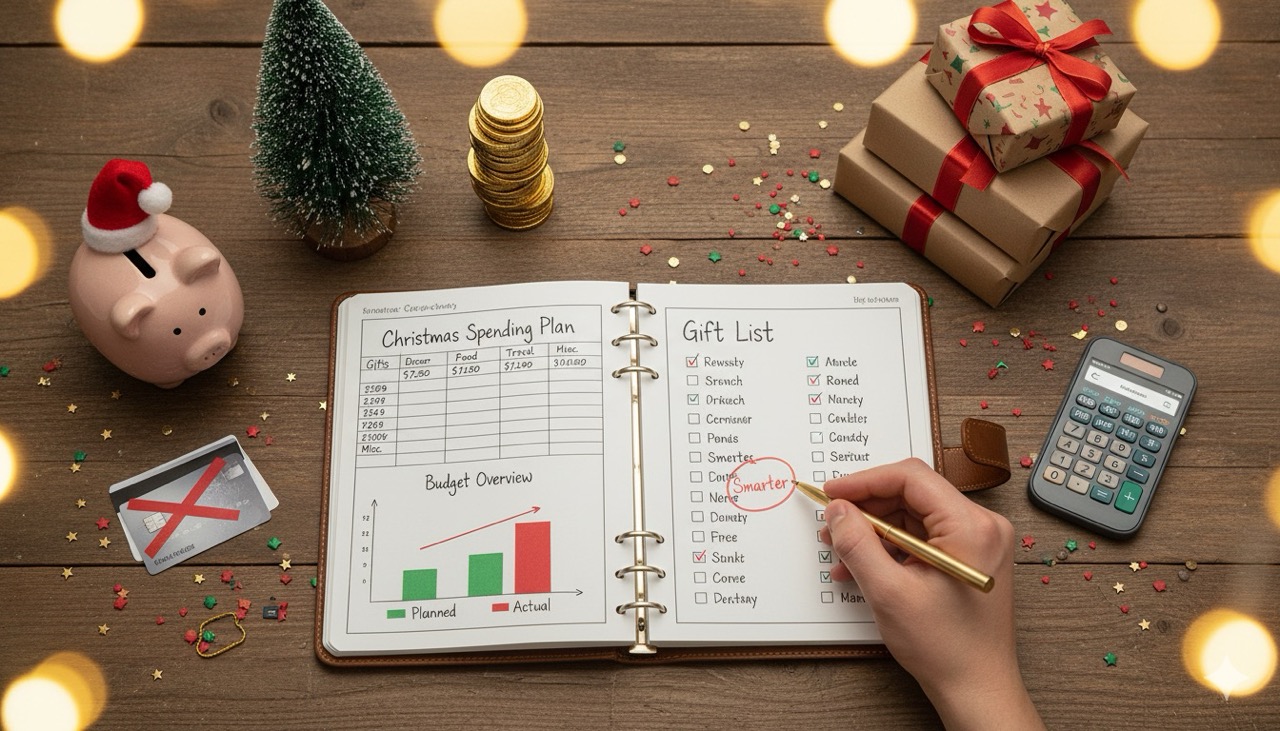
Holiday spending can feel like a test of generosity. There are gifts to buy, travel plans to consider, meals to organize and social expectations that can quietly expand the budget. The pressure is especially difficult when prices remain high and people are already managing rent, groceries, transportation and other everyday costs.
The goal should not be to spend as little as possible or to compete with what other people are buying. It should be to make thoughtful choices without turning December into a financial problem that follows you into the new year. That requires a plan before the sales, countdowns and last-minute invitations start making decisions for you.
A consumer survey released by EY-Parthenon on October 29, 2026, found that holiday spending remains resilient despite affordability concerns. The survey reported that 62% of consumers planned to spend the same amount or more on gifts than the previous year. At the same time, 42% said they were more stressed about affording gifts than they had been a year earlier, and 14% expected to carry holiday-related debt into 2027.
What the 2026 holiday spending outlook says

| Survey finding | Share of respondents |
|---|---|
| Plan to spend the same amount or more than last year | 62% |
| Feel more stressed about affording gifts | 42% |
| Expect to carry holiday debt into 2027 | 14% |
| EY forecast for U.S. holiday retail sales growth | 5.2% |
EY-Parthenon forecast a 5.2% increase in U.S. retail sales during the November–December holiday season, reaching $1.08 trillion. Its survey found that shoppers were looking for promotions, starting earlier and making trade-offs in other spending categories to preserve gift budgets.
The numbers reveal a tension. Many households still want to celebrate and buy gifts, but a substantial share is worried about affordability. Some shoppers are cutting back on restaurants, entertainment, electronics or travel to make room for holiday purchases. Others are waiting for discounts or using debt.
A strong retail forecast does not mean every household can comfortably spend more. Retail sales are an economy-wide measure, not a personal budget recommendation. Your own limit should be based on income, essential expenses, savings goals and existing debt—not a national spending projection.
Start with the amount you can actually afford

Before making a list of gifts, decide how much money is available after essential expenses. Include rent or mortgage, utilities, groceries, transportation, insurance, minimum debt payments and any savings commitments that matter to you. The amount left over is the starting point for holiday spending—not the amount a credit card happens to make available.
If the number is small, that is still a real budget. A useful limit is one you can follow without borrowing for basics or skipping bills. If the budget is zero, the responsible decision may be to choose free or low-cost ways to celebrate rather than trying to manufacture spending power.
Build a complete holiday budget

Gift costs are only one part of the season. A realistic plan includes the expenses that tend to appear around them. Travel, shipping, wrapping, decorations, food, events and charitable giving can all add up. If you budget only for presents, the total will almost certainly be higher than expected.
- Gifts: Set a total limit and a separate amount for each person.
- Travel: Include transportation, lodging, parking, meals and baggage fees.
- Food and hosting: Plan for groceries, drinks, disposable supplies and shared meals.
- Shipping and wrapping: Include delivery fees, boxes, tape and gift bags.
- Events: Account for tickets, outfits, rides and childcare if needed.
- Giving: Choose a charitable amount that fits after essentials and savings.
A simple spreadsheet or notes app is enough. Write down the total, assign amounts to categories and subtract each purchase when it happens. The point is to make the remaining balance visible.
Use a gift list to prevent impulse buying

A gift list turns a vague intention to shop into a set of decisions. Write each recipient’s name, the amount you plan to spend and one or two gift ideas. If a product costs more than the limit, decide whether to find an alternative or reduce another category. Do not let a flash sale make that decision for you.
It can also help to agree on expectations with family and friends. Suggest a price cap, a gift exchange, homemade gifts or a shared meal instead of buying for everyone. People may appreciate a clear conversation more than an expensive present purchased under financial stress.
How to judge a sale

A discount is only valuable if the purchase was already part of your plan. A product marked down from an inflated reference price can still be poor value. Compare prices across retailers, check the item’s actual specifications and read return policies before paying.
For electronics and higher-priced gifts, compare the exact model number rather than relying on similar product names. For clothing, check size charts and return costs. For subscriptions or digital services, look at renewal prices after any introductory offer.
Avoid buying something only because a countdown timer says the deal will disappear. Retailers use urgency because it can shorten the time people spend thinking. A few minutes of comparison can prevent an unnecessary purchase.
Be careful with buy now, pay later and credit cards

Payment plans can make a purchase look smaller by dividing it into installments. But several small payments can overlap and become a large monthly obligation. Before using a plan, add up every installment you already owe and check whether the new payment fits without affecting essentials.
Credit cards can offer convenience and consumer protections, but carrying a balance can make a holiday purchase more expensive through interest. If you cannot pay the statement balance in full, consider whether the gift is worth the added cost. A purchase that creates months of repayment is not automatically affordable because the first payment is small.
The EY survey found that 14% of respondents expected to carry holiday-related debt into 2027. That figure is a warning to plan carefully, not a reason to feel embarrassed. If you already have debt, prioritize a manageable season and avoid adding more simply to meet expectations.
A simple four-step spending check

- Before shopping: Set the total amount available after essentials.
- Before checkout: Confirm the item is on your list and compare the total price, including shipping and tax.
- Before using credit: Check the repayment date, interest terms and all other installment obligations.
- After buying: Record the purchase and update the amount remaining in the budget.
What to do if the budget is already stretched

If holiday costs are already higher than planned, pause new purchases and review what can still be returned or canceled. Contact travel providers or retailers early if plans need to change. If you have a credit-card balance, review the interest rate and minimum payment, and avoid taking on another high-cost obligation to cover it.
For people who are struggling to cover essentials, gifts should not come first. Housing, food, utilities, transportation and required debt payments need priority. If you are behind on bills, contact the provider to ask about hardship arrangements rather than ignoring the account.
The bottom line

A meaningful holiday does not require a perfect gift list or a record-breaking shopping total. The strongest plan is one that protects your finances while leaving room for the parts of the season you value most. Set a limit, include the hidden costs, compare prices and be cautious about payment plans that push the bill into next year.
The most generous decision may be choosing a celebration you can afford. Starting January without a pile of holiday debt is a gift to your future self—and it leaves more room to make choices throughout the year.
Sources and further reading

EY-Parthenon: Holiday spending remains resilient despite affordability pressures (October 29, 2026).
Related reading: How to Build a Personal Budget That Actually Works and 15 Everyday Habits That Quietly Waste Your Money.



Leave a Reply