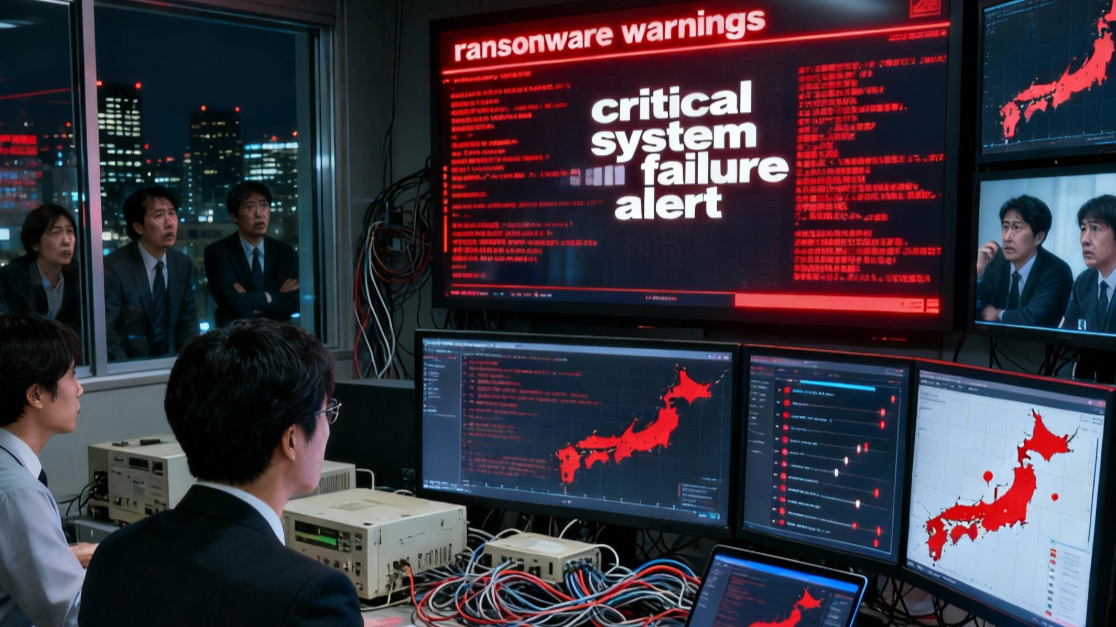
Japan has adopted an emergency cybersecurity package worth about 10 billion yen, or roughly $63 million, as the government responds to a series of data breaches and cyberattacks affecting businesses and public institutions. The measures announced November 6 include AI-assisted checks for system vulnerabilities, additional support for police investigations and a public-private team intended to help companies respond quickly after an attack.
Nippon.com, citing Jiji Press, reported that about 2 billion yen will be used to check government systems for vulnerabilities with AI technology. Roughly 4.1 billion yen is earmarked for equipment and training related to police cybercrime investigations, while about 3.8 billion yen will strengthen the Digital Agency’s system security. The Japan Times also reported plans for specialist teams to test systems and assist organizations facing attacks.
Why Japan is expanding its response

Cyberattacks can disrupt far more than websites. They can expose customer records, interrupt manufacturing, interfere with logistics, compromise public services and create costs that continue long after systems are restored. A company may need to investigate the intrusion, notify affected people, replace compromised credentials, rebuild infrastructure and deal with legal or regulatory obligations.
The official package allocates approximately 2 billion yen to AI-assisted vulnerability checks on government systems, 4.1 billion yen to police equipment and training for cybercrime investigations, and 3.8 billion yen to strengthen Digital Agency systems. Those line items total 9.9 billion yen, which the government describes as about 10 billion yen. The package also calls for public-private cyber-rescue support and coordinated teams for serious incidents. The policy reflects a shift from treating cybersecurity as a problem individual organizations must solve alone toward building a coordinated response capability. Smaller companies may not have dedicated security teams or the resources to investigate sophisticated intrusions. A shared support mechanism can help them contain incidents before they spread through suppliers, customers or connected systems.
The role of artificial intelligence

AI can help security teams analyze large volumes of logs, identify unusual patterns, prioritize vulnerabilities and simulate attacks. Those capabilities can be useful when defenders face more alerts than human analysts can investigate manually. But AI is not a magic shield. Models can produce false positives, miss unfamiliar attack patterns or be manipulated by poor data and insecure integrations. Human expertise, clear authorization and careful testing remain essential.
There is also a dual-use problem: attackers can use AI to write convincing phishing messages, automate reconnaissance and adapt malicious code. Defenders therefore need to improve monitoring and incident response while keeping sensitive systems protected from the very tools intended to secure them.
What businesses should do now

- Maintain an accurate inventory of devices, cloud services, software and third-party connections.
- Enable multifactor authentication, especially for administrator and remote-access accounts.
- Patch internet-facing systems quickly and prioritize known exploited vulnerabilities.
- Keep offline or otherwise protected backups and test restoration procedures.
- Prepare an incident-response plan with named contacts, decision authority and a process for notifying customers and regulators.
- Train employees to recognize phishing and report suspicious activity without fear of blame.
These basics are not glamorous, but they reduce the opportunities attackers exploit. A company does not need to wait for a government rescue team to improve its security posture. It can start by knowing what it owns, limiting unnecessary access, keeping systems updated and rehearsing how to respond when something goes wrong.
A broader policy challenge

Japan’s package also raises questions about how far governments should go in accessing infrastructure associated with cybercriminals, sharing threat intelligence and coordinating with private technology companies. Stronger response powers may help disrupt attacks, but they require oversight, clear legal boundaries and safeguards for privacy and legitimate online activity. Public confidence depends on explaining what authorities can do and how those powers are controlled.
The bottom line

Japan’s 10 billion yen package is a concrete response to a growing digital-security challenge. AI-assisted vulnerability checks and specialist rescue teams could improve national resilience, particularly for organizations without deep in-house expertise. But funding and new teams will only work if they are paired with strong basic security, transparent oversight and cooperation across industries. The broader lesson for businesses everywhere is that cybersecurity is no longer just an IT department issue; it is part of operational continuity and public trust.
Sources and further reading

- Japan Cabinet Secretariat: Official emergency cybersecurity package, November 6, 2026 (PDF)
- Nippon.com / Jiji Press: Budget breakdown for the 10 billion yen package
- Associated Press: Japan announces emergency cybersecurity package
- The Japan Times: Emergency cyberdefense package



Leave a Reply