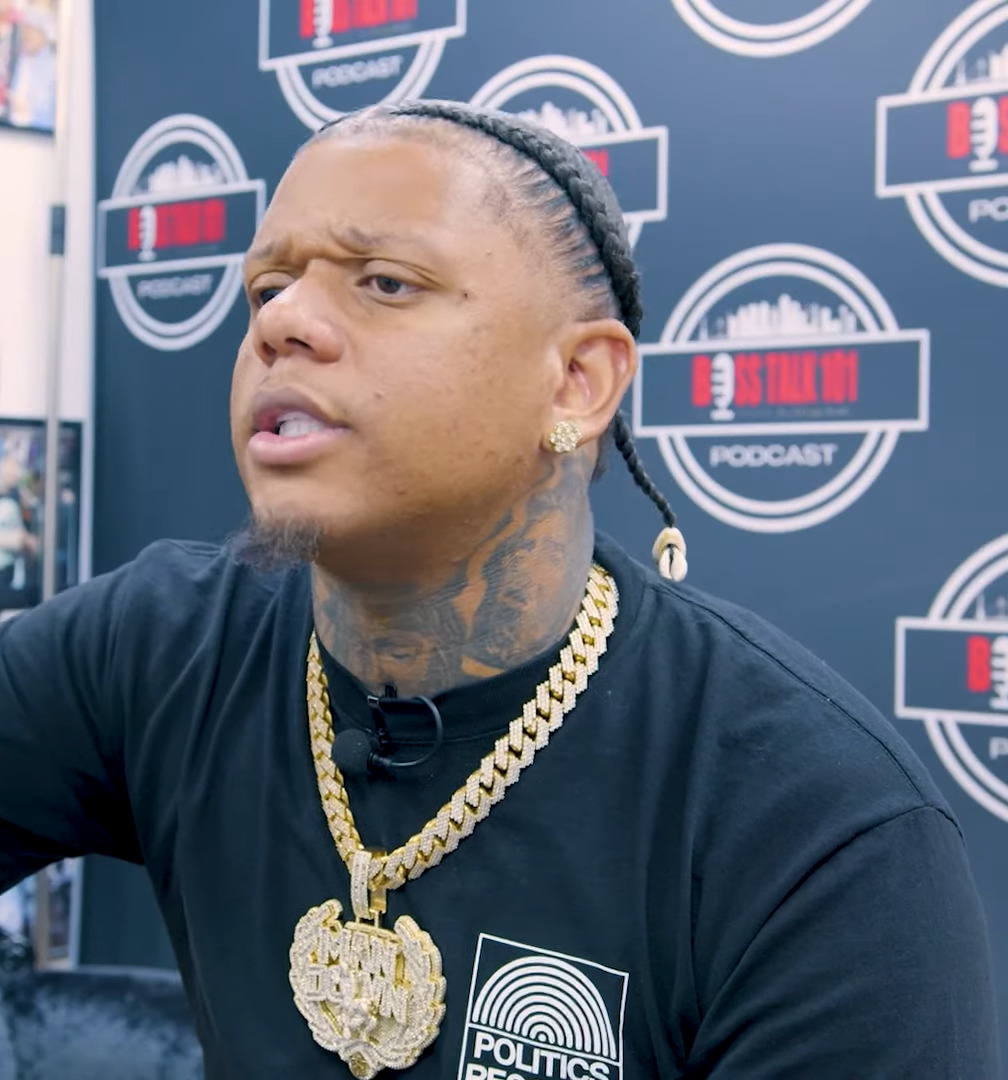
Updated November 13, 2026: Yella Beezy, whose legal name is Markies Conway, has been found guilty of capital murder in the 2020 killing of Dallas rapper MO3, born Melvin Noble. A Dallas County jury returned a unanimous verdict on the sixth anniversary of Noble’s death. Conway was sentenced to life in prison without the possibility of parole. The verdict closes one major chapter in a case that began with a shocking freeway shooting and grew into a years-long murder-for-hire investigation, but another defendant remains charged.
The case has drawn national attention because it involves two artists who emerged from the same Dallas hip-hop scene, a rivalry prosecutors said escalated over several years, a daylight killing on Interstate 35, disputed witness testimony, financial allegations and a trial that forced jurors to weigh music, motive and circumstantial evidence. Here is the full timeline and what the verdict does — and does not — establish.
1. Who Were MO3 and Yella Beezy — and How Did the Dallas Rap Rivalry Begin?

MO3: The voice Dallas fans connected with

MO3 was the stage name of Melvin Noble, a Dallas rapper whose music blended melodic hooks, street-level storytelling and emotionally exposed writing. He was known for records that sounded personal rather than distant: songs about pressure, loyalty, loss, ambition and the realities surrounding the neighborhoods he represented. His delivery helped him stand out in a crowded Southern rap landscape.
One of his best-known records was his version of Errybody, which gained additional attention through a collaboration with Baton Rouge rapper Boosie Badazz. The Associated Press reported that MO3 had more than 800,000 Instagram followers at the time of his death. His catalog and his connection with Dallas listeners helped make his killing a major loss for the city’s music community. The Dallas Observer’s remembrance of MO3 offers more context on his sound and local impact.
Yella Beezy: A breakout artist with national momentum

Yella Beezy, born Markies Conway, also came out of Dallas and built a different kind of mainstream momentum. His 2017 single That’s On Me became his signature record, helping move him beyond the local scene. He later reached a wider audience with Bacc At It Again, featuring Quavo and Gucci Mane. The Associated Press has described those records as central to his public profile.
Both men had reasons to command attention in the same regional ecosystem: local identity, overlapping audiences, music-industry relationships and the visibility that comes with being a recognizable Dallas rapper. That shared setting is important background, but it is not proof of a crime. For a wider look at the business side of an artist’s career, see our guide to how music streaming royalties work. The criminal case ultimately asked jurors to decide whether Conway arranged and financed MO3’s killing — a question that required evidence beyond the existence of a rap rivalry.
What is known about the alleged feud?

Prosecutors described the tension between Conway and Noble as a feud that stretched back to approximately 2017 and intensified over time. During the trial, the state presented the conflict as a possible motive for the killing. Reports on the proceedings also described earlier incidents involving people in the artists’ circles and a 2018 shooting in which Conway was wounded while driving on the Sam Rayburn Tollway in Lewisville.
That 2018 shooting is a significant part of the prosecution’s narrative because prosecutors argued that Conway’s experience of being attacked on a roadway, along with his later public comments about retaliation, helped explain the alleged motive. But the distinction matters: the fact that Conway was shot in 2018 does not independently establish that MO3 was responsible, nor does it by itself prove that Conway later arranged a murder. Those are separate questions, and the jury’s task was to assess the evidence admitted in the capital-murder case.
For readers trying to understand the story, the most accurate description is that the state presented a long-running feud as context for an alleged murder-for-hire plot. The defense disputed the prosecution’s interpretation and argued that the state was connecting events without proving Conway’s role beyond a reasonable doubt. That disagreement became one of the central battles of the trial.
2. The November 11, 2020 MO3 Shooting and the Murder-for-Hire Investigation

What happened on I-35E in Dallas?

On November 11, 2020, MO3 was driving on Interstate 35E in south Dallas around midday when a gunman approached his vehicle. Authorities said the attacker got out of another vehicle carrying a firearm. MO3 left his car and ran along the freeway as the gunman pursued him and opened fire. Noble was struck and later died at a hospital. A bystander was also shot but survived.
In its account of the case after the verdict, the Associated Press reported that prosecutors said the gunman wore a mask and fired more than 40 rounds from an AK-47-style pistol while chasing MO3. The attack happened in broad daylight on a busy Dallas roadway, making the violence especially shocking to witnesses and the wider community. The Associated Press report on the verdict summarizes the shooting and the jury’s decision.
Who was accused of carrying out the shooting?

Investigators identified Kewon White as the gunman. White was prosecuted separately and, in September 2026, a jury found him guilty of capital murder in MO3’s death. He was sentenced to life in prison without the possibility of parole. His conviction established his criminal responsibility for the killing; it was a separate proceeding from the later case against Conway.
Another man, Devin Brown, was also charged in connection with the alleged plot. Prosecutors described a chain of people who they said helped connect the alleged plan, the money and the shooter. Reporting on Conway’s trial described allegations that Brown helped pass along information and that Jerry Johnson acted as an intermediary in the alleged payment process. These were prosecution allegations presented as part of the case, not a reason to treat every person mentioned as already convicted.
The alleged $40,000 payment

A central allegation was that Conway arranged for MO3 to be killed and that $40,000 was promised or paid for the attack. Prosecutors argued that White was hired through intermediaries and that financial records and testimony helped connect the alleged payment to Conway. The amount became one of the most repeated details in coverage because it gave the alleged murder-for-hire theory a specific financial claim for jurors to examine.
It is important not to turn the prosecution’s theory into a simplified story that erases the legal process. The state had to prove the charged offense to the jury. Conway pleaded not guilty and denied involvement. His lawyers argued that prosecutors had not established a reliable link between him and the shooting, and that the case depended on inference and disputed testimony. The jury ultimately rejected the defense and found him guilty.
From investigation to arrest and indictment

MO3’s death did not lead to an immediate trial of every person prosecutors would later accuse. White and Brown were charged earlier in the investigation, while Conway’s arrest came years after the shooting. Conway was arrested on March 20, 2025, and charged with capital murder in an alleged murder-for-hire plot. His bond was initially set at $2 million and was later reduced to $750,000, according to CBS Texas reporting from the time.
The delay between the killing and Conway’s arrest became part of the public story. For MO3’s family and supporters, the case represented years of waiting for answers. For the defense, the passage of time and the reliability of witnesses and records became issues to challenge. The CBS Texas report on the 2025 charge provides an earlier snapshot of the allegations and arrest.
3. Inside the Yella Beezy Trial: Witnesses, Evidence, Verdict and What Happens Next

The trial began with Conway pleading not guilty

Jury selection in Conway’s capital-murder trial took place in late October 2026. Twelve jurors and three alternates were selected. Opening statements followed, and prosecutors framed the case as the result of a feud that had escalated over years. The defense argued that the state would not be able to prove that Conway hired or directed the shooter.
The trial included testimony about the freeway attack, the investigation, the alleged financial trail and the relationships among people prosecutors said were involved. A doctor who witnessed the shooting testified about the scene and efforts to help MO3. Jurors also heard from witnesses whose accounts were challenged by both sides. NBC 5’s day-by-day trial coverage followed the testimony as the case entered its third week.
Jose Bodega’s testimony became a major flashpoint

One of the most closely watched witnesses was Theodore Thomas, known as rapper Jose Bodega. Prosecutors questioned him about earlier grand-jury testimony in which he had described a feud and made statements connecting Conway and others to an alleged payment for MO3’s killing. On the witness stand during the trial, Thomas said he had made up parts of that earlier account. The judge allowed prosecutors to treat him as a hostile witness and confront him with what he had previously said.
Thomas explained that he had lied in the earlier proceeding because he feared the consequences of his own legal situation and wanted to avoid a possible life sentence. That reversal gave the defense an opening to challenge the credibility of the prosecution’s witness while giving prosecutors a reason to argue that his earlier statements should still be considered. Jurors had to evaluate the inconsistency rather than simply accept one version without scrutiny. CBS Texas provided a detailed account of the testimony in its trial recap.
Why prosecutors brought up music and public comments

Music and public statements also became part of the courtroom debate. During closing arguments, prosecutors referenced lyrics from Conway’s songs and performed portions of them to support their interpretation of the feud and alleged motive. They also pointed jurors to an interview in which Conway spoke about getting revenge after the 2018 shooting that injured him. The state argued that the material helped explain motive and the broader context of the case.
The defense pushed back, arguing that lyrics and bravado should not be mistaken for proof that a person arranged a killing. Defense attorney John Gussio told jurors that the state had brought them speculation, and the defense emphasized gaps it believed remained in the prosecution’s theory. This is a crucial distinction for readers: a song lyric is not automatically a confession, and a public statement about retaliation is not, by itself, proof of a murder-for-hire agreement. Jurors were asked to consider the admitted evidence as a whole.
The November 11, 2026 verdict: guilty and life without parole

After closing arguments on November 10, jurors began deliberating on the morning of November 11 — the sixth anniversary of MO3’s death. They reviewed exhibits and requested access to evidence during deliberations. Later that afternoon, the jury returned a unanimous guilty verdict against Conway for capital murder by remuneration.
Conway was sentenced to life in prison without the possibility of parole. FOX 4 reported that he was handcuffed and taken into custody after the verdict. The conviction also triggers an automatic appeal under Texas procedure; his defense attorney Toby Shook said the team intends to challenge the result, describing appellate issues as its next step. The courtroom reaction was emotional, with some people leaving and others crying. The Dallas County District Attorney’s Office also issued an official November 11 conviction announcement. The Associated Press and local outlets confirmed the verdict and sentence. Read the FOX 4 live verdict report, NBC 5’s verdict coverage and the Associated Press story carried by ABC News.
What the conviction means — and what remains unresolved

The verdict means the jury found the state had proven Conway guilty of capital murder beyond a reasonable doubt. It is a major legal milestone in the case and a significant development for MO3’s family, friends and fans, who have followed the investigation for six years. White has also been convicted and sentenced to life without parole for the killing.
But the case is not necessarily finished for everyone accused. Devin Brown remains charged and is awaiting his own trial. His legal status must be described separately: a charge is an accusation, not a conviction. Any future proceedings involving Brown will have their own evidence, witnesses and outcome.
The larger impact on Dallas hip-hop

Beyond the courtroom, the MO3 case has become one of the defining tragedies in recent Dallas rap history. MO3 was killed at 28, at a point when his music had reached a substantial audience and his influence in the city was still growing. The case also shows how public rivalries can become part of a much larger story when investigators allege that conflict moved beyond records, interviews and online exchanges into real-world violence.
There is a temptation to reduce the story to a simple rap-beef headline. That misses the human cost. A young artist lost his life, a bystander was wounded, families endured years of uncertainty, and the legal process has now placed another artist in prison for the rest of his life. The music may remain part of the public conversation, but the central fact is that a person was killed and a jury has now returned a murder conviction.
Key dates in the MO3 and Yella Beezy case

- 2017: Prosecutors later described the tension between Conway and Noble as a feud that began around this period.
- October 2018: Conway was shot and wounded while driving on the Sam Rayburn Tollway in Lewisville.
- November 11, 2020: MO3 was chased and fatally shot on I-35E in Dallas.
- 2021: Kewon White and Devin Brown were charged in connection with the killing, according to earlier reporting.
- March 20, 2025: Yella Beezy was arrested and charged with capital murder.
- September 2026: Kewon White was convicted of capital murder and sentenced to life without parole.
- Late October 2026: Jury selection began in Conway’s trial.
- November 10, 2026: Closing arguments concluded.
- November 11, 2026: Conway was found guilty and sentenced to life without parole, six years after MO3’s death.
Frequently asked questions
Was Yella Beezy found guilty in the MO3 murder case?
Yes. On November 11, 2026, a Dallas County jury unanimously found Yella Beezy, whose legal name is Markies Conway, guilty of capital murder in MO3’s killing.
What sentence did Yella Beezy receive?
He was sentenced to life in prison without the possibility of parole.
Who shot MO3?
Kewon White was identified as the gunman and was separately convicted of capital murder in September 2026. He also received life in prison without parole.
How much money did prosecutors say was involved?
Prosecutors alleged that $40,000 was offered or paid in connection with the murder-for-hire plot. Conway denied involvement, and the jury ultimately found him guilty after hearing the evidence.
Is Devin Brown convicted?
No conviction has been reported in this case for Brown as of November 11, 2026. He remains charged and is awaiting trial. His presumption of innocence remains in place unless and until the state proves the charge in court.

The bottom line: Six years after MO3 was killed on a Dallas freeway, the case has reached a landmark point: the man prosecutors accused of arranging the murder has been convicted and sentenced to life without parole. The verdict answers a major question in the investigation, but the story is bigger than one courtroom decision. It is also the story of MO3’s music, the Dallas scene that shaped him, the devastating cost of violence and the long road from an unsolved killing to a jury’s verdict.
Reporting note: This article distinguishes the prosecution’s allegations from the defense’s arguments and the jury’s final verdict. It reflects reporting available as of November 13, 2026. The Immortal Times will update this report if significant developments occur in Devin Brown’s case or Conway’s appeal.