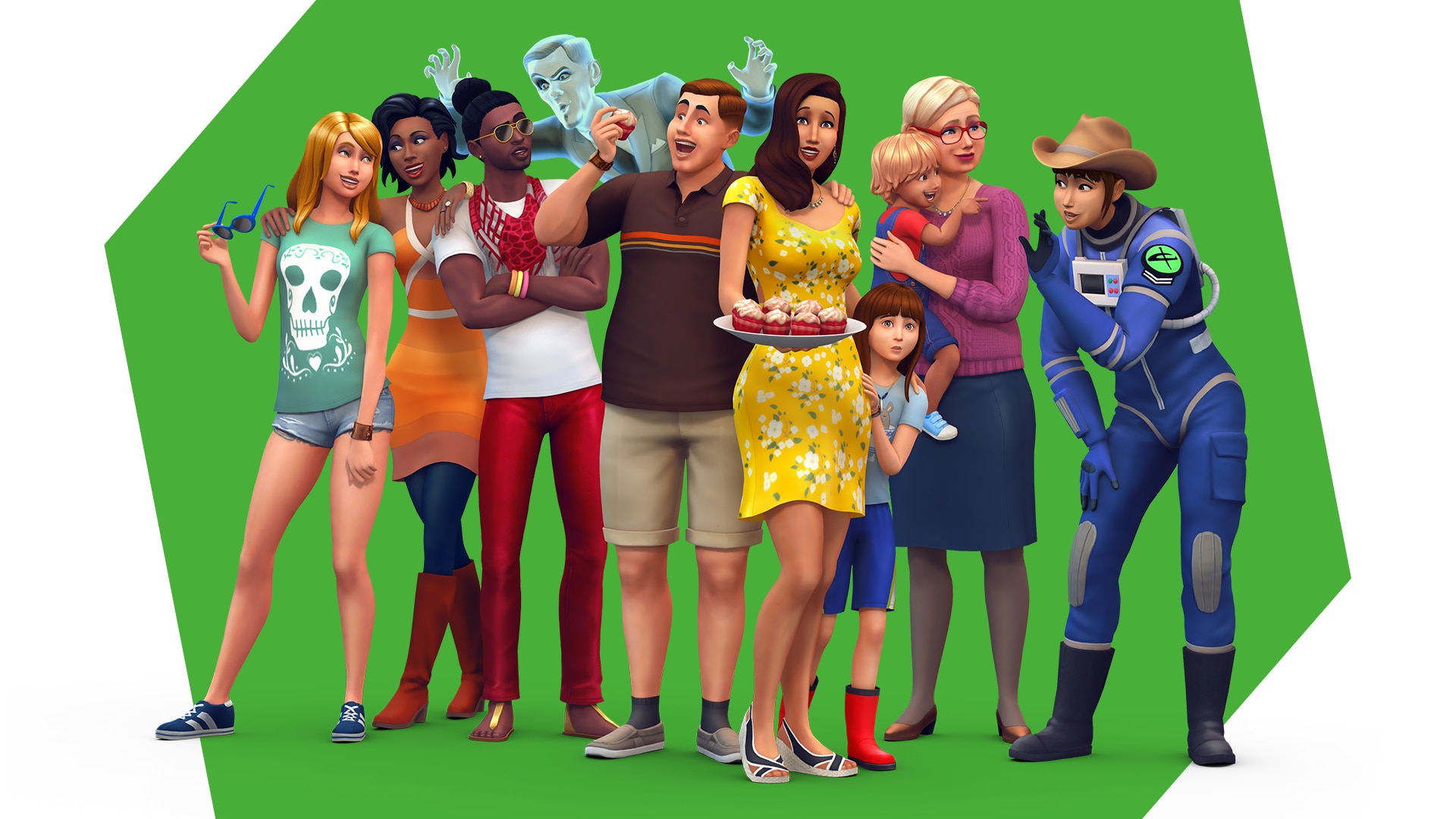
The Sims has spent more than two decades inviting players to build homes, shape characters and create stories that can be as ordinary or as outrageous as they like. For many women, it has become a familiar part of gaming culture. But what does academic research actually say about women who play—and why the game continues to hold their attention?
The strongest answer is not that women all enjoy the same things. Research points instead to a combination of creativity, fantasy, control, diversion, enjoyment and social connection. Those motivations overlap, and they help explain why one player might spend hours designing a home while another focuses on character stories, relationships or community creations.
What research actually says about women who play The Sims

One of the best-known studies focused specifically on The Sims 2. Published in New Media & Society in 2010, researchers Jeroen Jansz, Corinne Avis and Mirjam Vosmeer surveyed 760 players recruited through a Dutch Sims website. Women made up 84% of the participants.
That figure needs context. The sample was self-selected, recruited from a fan website and heavily weighted toward younger players: the average age was 17, and 74% were under 18. It is evidence about that particular group of Sims 2 respondents—not a current, worldwide census of every Sims player.
The researchers examined six motivations: fantasy, social interaction, diversion, control, challenge and enjoyment. Fantasy included creating personal stories and experiencing things outside everyday life. Diversion involved doing something different or taking one’s mind off ordinary concerns. Control captured the appeal of guiding Sims and influencing what happens to them.
A separate 2022 study by Meghdad Mehrabi used in-depth interviews with 18 men and 20 women who played The Sims, alongside analysis of online forums. It identified appearance, character, storyline, control and complexity, fantasy, and social interaction as important parts of players’ experiences. Its interview sample was smaller, but it adds detail to the ways players describe the game.
The important point: the research does not establish one universal female motivation. It shows a varied mix of reasons for playing, and it cautions against treating women as one uniform audience.
Character creation, identity and creative freedom
One of the first decisions a player makes is often deciding who a Sim will be. Appearance, clothing, personality, aspirations and relationships turn a blank character into someone with a particular identity.
A player might recreate a version of herself, design someone completely different, build a household inspired by people she knows or invent an entirely fictional cast. The game makes those choices part of ordinary play. Sometimes the process is personal; sometimes it is simply an enjoyable design exercise.
Research on Sims modification and identity adds another layer. In a 2014 article in Simulation & Gaming, Hanna Wirman examined Finnish players who modified The Sims 2. The study considered how identities as women, game modifiers and members of a wider player community could overlap. Custom content and modification can be ways players make the game feel like their own.
That does not mean every player is consciously exploring identity. But the tools allow players to experiment with appearance, roles and stories without requiring one prescribed way to play. Electronic Arts itself describes The Sims 4 as a game where players can create custom Sims and build a world that expresses them.
Dream homes, storytelling and the appeal of control

For some players, the house is the main event. They plan floor layouts, choose furniture, change colors, landscape yards and keep adjusting details until a space feels right. Others download rooms and houses made by community members, then adapt them to fit a new story.
This is a creative sandbox. There is no single correct way to design a home, and a player can spend an entire session experimenting with a kitchen, bedroom, garden or elaborate mansion without advancing a character’s storyline. Building involves visual design, spatial planning, problem-solving and experimentation—not merely decorating.
The storytelling side is just as flexible. Sims can fall in love, fall out, make friends, start families, change careers or pursue goals chosen by the player. Unexpected events can disrupt even the most carefully planned household. One player may build a family legacy; another may create a chaotic soap opera; someone else may focus on careers, supernatural storylines or a peaceful home.
The 2010 study’s categories of fantasy and control help explain this appeal. Players can explore situations that would be difficult or impossible in everyday life while still having meaningful influence over their Sims. That control is not total—the game has rules and limits—but it gives players room to direct the experience.
Community, connection and the question of well-being

Although the main game can be played alone, the wider Sims experience is highly social. Players post builds, character makeovers, screenshots, challenges, stories and custom content. They trade advice, compare designs and follow creators whose play styles they enjoy.
EA’s Gallery lets players browse and share Sims, households, rooms and lots. Fan forums and social platforms give players more places to discuss updates, showcase creations and develop shared challenges.
A 2023 article by Zachary D. Palmer examined gender dynamics in a women-dominated Sims 4 online community through forum discussions and online observation. It explored how community members responded to disputes about gender and inclusion, and how some participants worked to maintain spaces they considered safer for women and LGBTQ players. The work is a reminder that welcoming communities are built through participation and shared norms; they do not happen automatically.
Players often describe The Sims as relaxing or a way to unwind. Research into motivations supports the idea that some people use the game for diversion, enjoyment and imaginative escape. But the studies discussed here were not clinical trials. They do not prove that the game treats anxiety, reduces stress for everyone or produces guaranteed mental-health benefits.
A careful conclusion is that some players find the game enjoyable, absorbing or restorative, while others approach it as a creative project or social hobby. As with any entertainment, balance matters: play should not routinely displace sleep, responsibilities or relationships.
Why the appeal reaches beyond a stereotype
The research points to a richer explanation than “women like decorating games.” Women who play The Sims are not one uniform audience, and the game offers a wide range of activities: character design, building, storytelling, strategy, experimentation, social interaction and simple fun.
These studies also challenge the idea that there is one correct way to be a gamer. A player who spends hours designing a house is still engaging deeply with a game. So is someone who builds elaborate family stories, experiments with mods or shares creations with an online audience.
More than two decades after the franchise began, its lasting appeal may come from that flexibility. The Sims gives players a toolkit rather than one prescribed adventure. They can create a life that resembles their own, imagine one that is completely different or simply see what happens when a carefully planned household gets a little chaotic.

The bigger takeaway: research into women and The Sims is not just about who plays a particular video game. It is also about creativity, identity, agency and the communities people build around shared interests. That is a much richer story than the old stereotype of who video games are supposedly for.
Research and further reading
- Jansz, J., Avis, C. & Vosmeer, M. (2010). “Playing The Sims2: an exploration of gender differences in players’ motivations and patterns of play.” New Media & Society.
- Mehrabi, M. (2022). “Gender Differences in Motivations and Gratifications to Play Video Games: The Study of the Sims Players’ Experiences.” Journal of Cyberspace Studies.
- Wirman, H. (2014). “Gender and Identity in Game-Modifying Communities.” Simulation & Gaming.
- Palmer, Z. D. (2023). “Moderating masculinity in women-dominated digital spaces: Men and masculinity in the Sims 4 online community.” Sociology Compass.
- Electronic Arts. The Sims 4 official features and game information.
- Electronic Arts Help. The Sims 4 Gallery: sharing and discovering player creations.
Editorial note: The studies cited span different years, countries, methods and versions of the game. Their findings provide insight into player motivations and community culture, but should not be treated as a current global demographic count or proof that every woman plays for the same reasons.




Leave a Reply