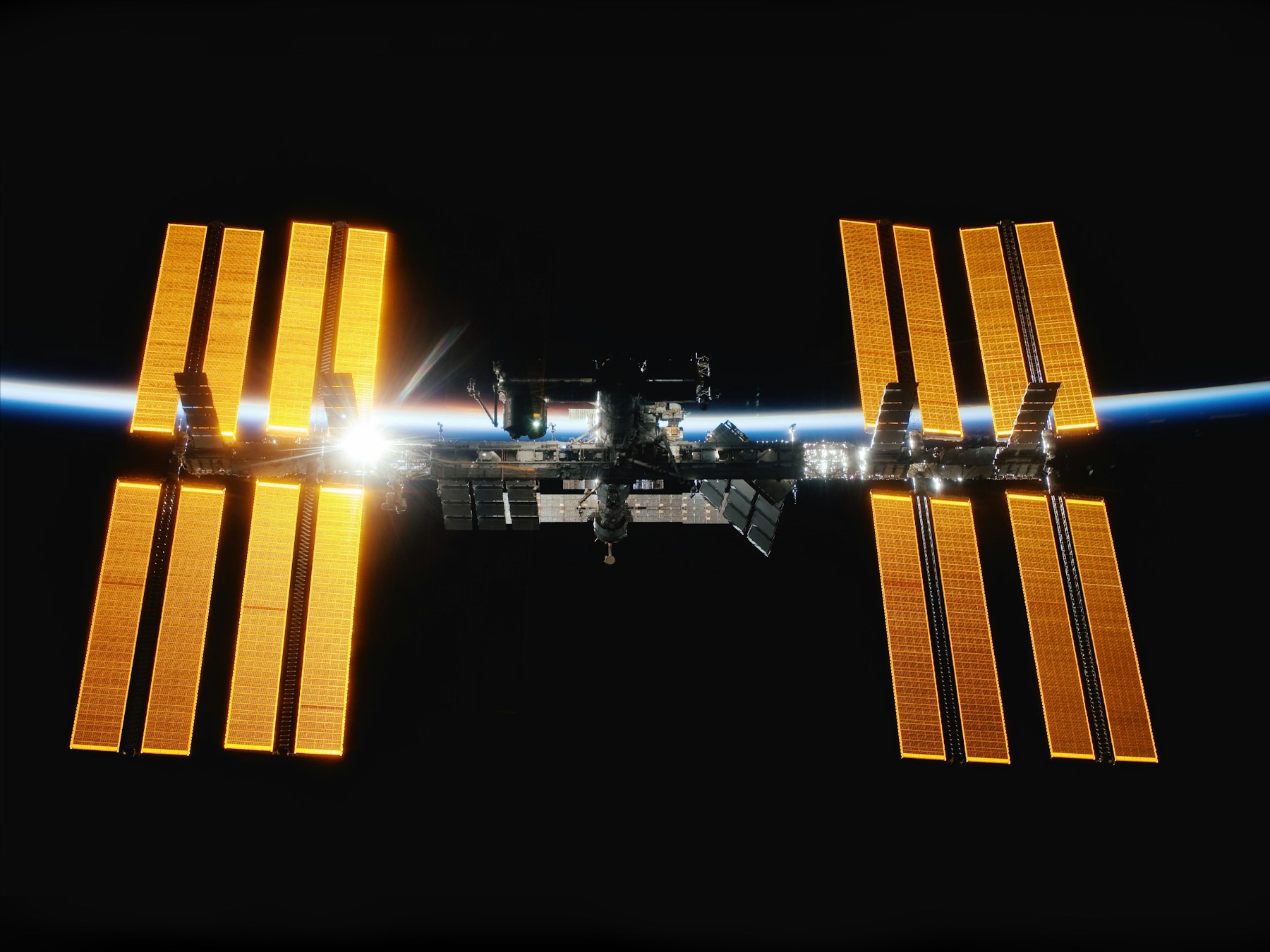
The International Space Station has completed a major power-system upgrade. On November 5, NASA astronaut Anil Menon and Canadian Space Agency astronaut Joshua Kutryk installed and deployed the eighth and final International Space Station Roll-Out Solar Array, known as an iROSA. The six-hour, 59-minute spacewalk finished a project that began in February 2021 and required 18 spacewalks to prepare equipment and install all eight arrays.
The result is more than a new set of panels in orbit. The arrays increase the station’s power-generation capacity from about 160 kilowatts to approximately 215 kilowatts, giving the orbiting laboratory additional electrical capacity as its original solar arrays age and the station continues supporting research and crew operations.
How the final iROSA installation was completed

Menon and Kutryk installed the final array on the station’s 3B power channel, then deployed it to complete the planned augmentation. The new roll-out arrays are designed to supplement the station’s existing solar power system. Their compact launch configuration allows them to be transported to orbit and then unfurled at the station, where they add generating area without requiring the entire original array structure to be replaced.
NASA said the work to augment the station’s power system began in February 2021. Since then, astronauts have completed 18 spacewalks to prepare power-channel equipment and install the eight arrays. The November 5 excursion was the 286th spacewalk in support of space-station assembly, maintenance and upgrades. It was Menon’s fifth spacewalk and Kutryk’s second.
The operation also illustrates how much of the ISS depends on carefully coordinated work between astronauts and ground controllers. Spacewalkers must work around the station’s structure, tools, cables and safety systems while the station moves at orbital speed. The installation is not simply a matter of attaching a panel: the equipment must be positioned, connected and deployed in a way that integrates with the station’s existing power channels.
The roll-out design is important because it adds power without replacing the original solar arrays. The older panels continue to provide electricity, while the iROSAs help compensate for the gradual decline in output that comes with years of exposure to the space environment. The completed set gives mission planners more flexibility in managing the station’s electrical budget.
Why the power increase matters for the space station

NASA puts the station’s power capacity at approximately 215 kilowatts after the upgrade, compared with about 160 kilowatts before the iROSA additions. That extra capacity matters because the ISS is both a home for astronauts and a research platform. Its systems need electricity for life support, communications, environmental controls, laboratory equipment, computers, experiments and visiting spacecraft operations.
More available power does not mean every experiment can run without limits. Electrical demand still has to be managed across station systems, and the amount of power available at any given moment depends on the station’s orientation, sunlight and operational conditions. The upgrade gives mission teams a larger overall supply to work with, but it does not remove the need for careful power planning.
The final array also marks the completion of a multi-year infrastructure project rather than the end of all station maintenance. The ISS continues to require regular inspections, replacement parts, system upgrades and crew spacewalks. NASA’s broader plans for the station include maintaining operations while preparing for a future controlled deorbit, so reliable power remains essential to the work ahead.
NASA’s full mission account is available in its November 5 spacewalk report. NASA also archived the spacewalk broadcast and mission details.
The arrays are known as roll-out solar arrays because they are compact when transported and then unfurl once they reach their operating position. This design is useful for a station that has been assembled in orbit over decades: the new equipment can be delivered in a relatively compact package and installed alongside existing hardware. The upgrade is a practical example of how a long-running space facility can extend its capabilities without replacing every major component at once.
The final installation is also a reminder that the ISS is an international project. NASA and its partners coordinate crews, robotics, mission control and hardware deliveries across multiple agencies. The successful deployment closes one planned power-augmentation chapter, but routine maintenance and future planning continue. Reliable electricity is not a headline-grabbing feature on its own; it is the foundation that lets the station support experiments, communications, life-support systems and the daily work of its crew.
The power upgrade is especially relevant because the station’s electrical systems are shared infrastructure. A laboratory payload may need power for an experiment, but it also relies on the same station-wide resources that support crew safety, communications and environmental systems. More generation capacity gives flight controllers additional room to schedule work and manage competing demands, while the station’s power-management procedures remain essential during periods when the orbiting complex moves through Earth’s shadow.
For another recent NASA development, see our report on Hubble’s discovery of missing oxygen in nearby dwarf galaxies.
Bottom line: The final iROSA completes the ISS power-augmentation project and raises the station’s stated generating capacity from about 160 to 215 kilowatts. It is a significant infrastructure milestone that supports the research platform’s remaining years of operation.



Leave a Reply