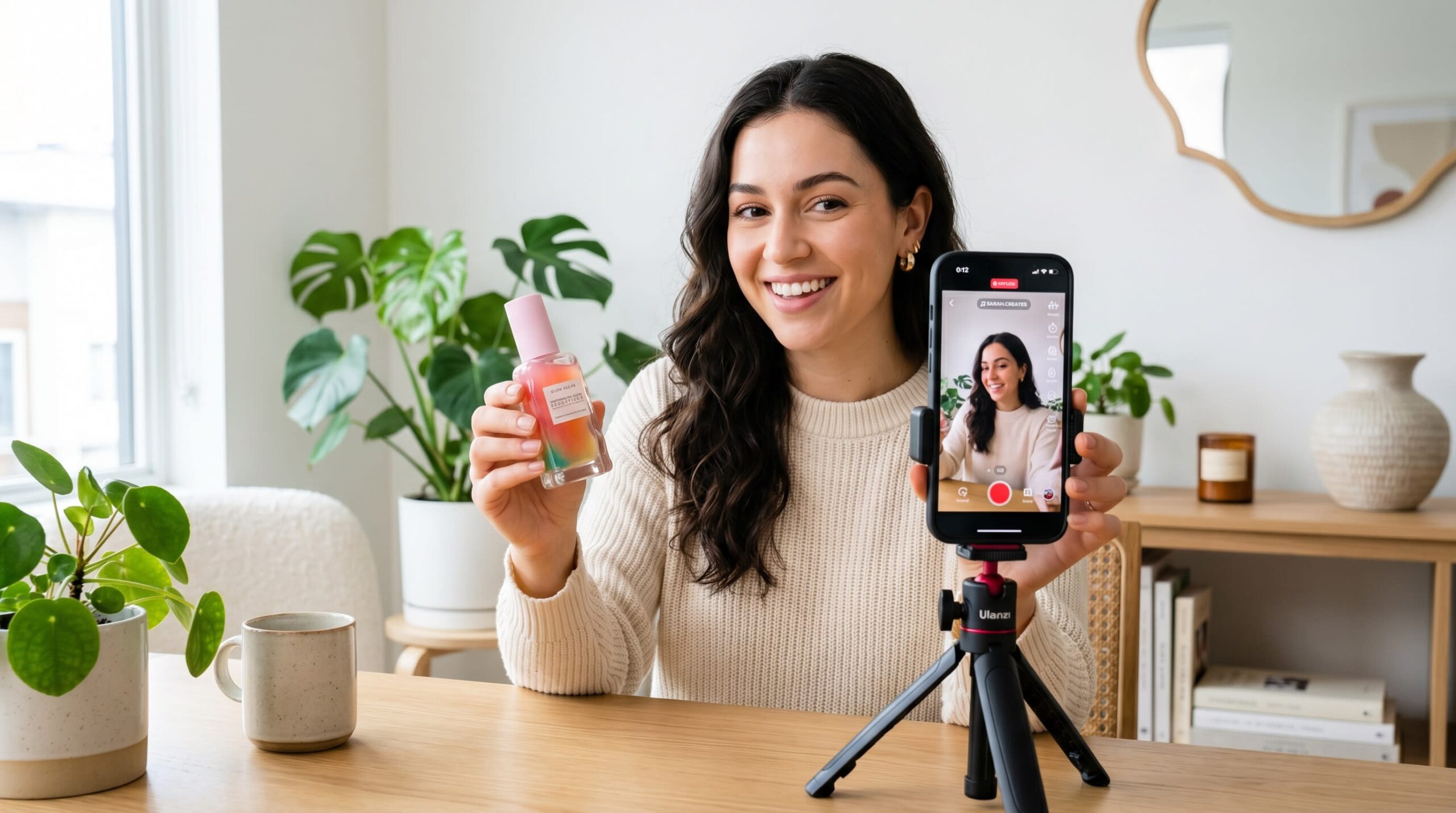
A UGC creator makes photos and videos that brands can use to show products in a relatable, everyday setting. The work might look like a customer review, unboxing, tutorial or quick product demonstration filmed on a phone. But the creator is usually being hired to produce a deliverable—not necessarily to publish it to a large personal audience.
The job is attracting attention as brands expand creator partnerships beyond one-off campaigns. Exploding Topics listed “UGC creator” among its fastest-growing U.S. topics in November 2026, reporting 8,600% search growth through its proprietary methodology. That percentage is a trend-growth signal, not a verified monthly Google search count. A separate Northwestern University and LTK study found that 91% of surveyed brands had an always-on creator-marketing component, while 92% used creator content in social advertising.
What a UGC creator does—and how the job differs from influencing

UGC stands for user-generated content. In marketing, the term commonly describes creator-made content that a brand can publish on its own channels, use in advertising or place on a product page. A UGC creator may be hired to film a product demonstration, record a testimonial-style video, photograph an item in use or produce several short clips for a campaign.
The key distinction is distribution. An influencer partnership often includes access to the creator’s audience: the creator posts to their own TikTok, Instagram, YouTube or other channel, and the brand pays for the content and the reach. A UGC-only assignment can be different. The creator delivers the files to the brand, and the company publishes or advertises them itself. A UGC creator does not need millions of followers—or even a large following—to make useful content.
That does not mean the two jobs can never overlap. A creator may produce UGC for a brand and also publish sponsored posts to their own audience. The contract should spell out which work is included: filming, editing, posting, audience access, paid-ad usage, raw footage or a combination.
Common UGC formats include unboxings, product reviews, tutorials, before-and-after demonstrations, routine videos, testimonials, voiceovers and lifestyle clips. The best format depends on the product. A phone accessory may need a hands-on demonstration; a skincare item may need a routine and texture close-ups; a software app may need a screen recording that shows a specific task being completed.
Why brands are spending more on creator-made content

Creator content has become more than a social-media post. Northwestern’s Medill Spiegel Research Center surveyed 209 senior marketing decision-makers at brands that invest in creator marketing in June 2026. Its findings say 91% of brands run a creator program with an always-on component, 80% are increasing creator budgets and 92% use creator content in social advertising. The study also found that brands are using creator assets in channels such as email, display and connected TV.
That helps explain why brands commission content even when the creator is not famous. Companies need a steady supply of different hooks, demonstrations, testimonials and visual styles to test in their own campaigns. One polished brand commercial may not answer every customer question. A short video showing how a product works in a normal home can fill a different role.
EMARKETER forecast that U.S. creators would receive more than $21 billion in revenue in 2026 and that micro- and nano-influencers would claim 45.5% of influencer-marketing spending. Those figures concern the wider creator economy and influencer spending—not UGC-only production fees—but they show how much marketing activity is moving toward creator partnerships.
For brands, the value is not simply that a video looks casual. Good content answers a question, demonstrates a real use case or helps a potential customer understand what they are buying. A creator who can explain a product clearly and show it honestly can be more useful than a generic clip built around a trend that has little connection to the product.
How to become a UGC creator and protect your work

You do not need an expensive camera to begin. A modern smartphone, stable tripod, clean background, natural light and clear audio can produce a usable first portfolio. Start with products you already own and make a few sample videos that show different skills: a short unboxing, a product demonstration, a direct-to-camera explanation and a voiceover with close-up footage.
Build a portfolio that lets a brand understand what it will receive. Include the video format, approximate length, category, your role in filming and editing, and whether each item is a sample or paid campaign. Do not imply that a brand hired you if it did not. You can link to examples through a simple portfolio page or a clearly organized social account. The Immortal Times has a related guide on building a personal brand online, which can help creators present their work consistently.
When a brand contacts you, clarify the scope before agreeing to a price. Ask how many finished videos and raw clips are required, the length and format, whether captions or revisions are included, the delivery date, and where the brand plans to use the content. Paid-ad usage, whitelisting or creator-handle access, exclusivity, extended licensing and perpetual usage can carry additional value. A fee for filming one video should not automatically grant unlimited use forever.
Put the agreement in writing. Confirm payment timing, cancellation terms, revision limits, ownership or licensing, the duration and territory of usage, and whether the brand can edit the content. Keep copies of the brief, approvals and final files. Avoid accepting vague terms such as “all rights included” without understanding what rights are being transferred or licensed.
Honesty matters as much as production quality. Do not claim to have used a product if you have not, invent results or repeat unsupported product claims. If you publish an endorsement to your own audience and have a material connection—such as payment, free products or another benefit—the FTC says that connection should be disclosed clearly and close to the endorsement. Its Disclosures 101 guide for social media influencers explains how to make those disclosures easy to notice.
UGC can be a practical entry point into paid creative work, but it is not effortless money. Brands still expect reliable communication, usable footage, truthful messaging and on-time delivery. The creators most likely to build repeat business are those who understand the brief, make the product easy to understand and protect both sides with clear agreements.
Research note: The 91%, 80% and 92% figures come from Northwestern Medill’s 2026 survey of 209 senior marketing decision-makers. EMARKETER’s $21 billion and 45.5% figures refer to the broader U.S. creator and influencer economy, not guaranteed earnings for individual UGC creators. Read the Northwestern Medill Creator Marketing 2026 findings and EMARKETER’s Creator Economy 2026 report for the original context.

Leave a Reply