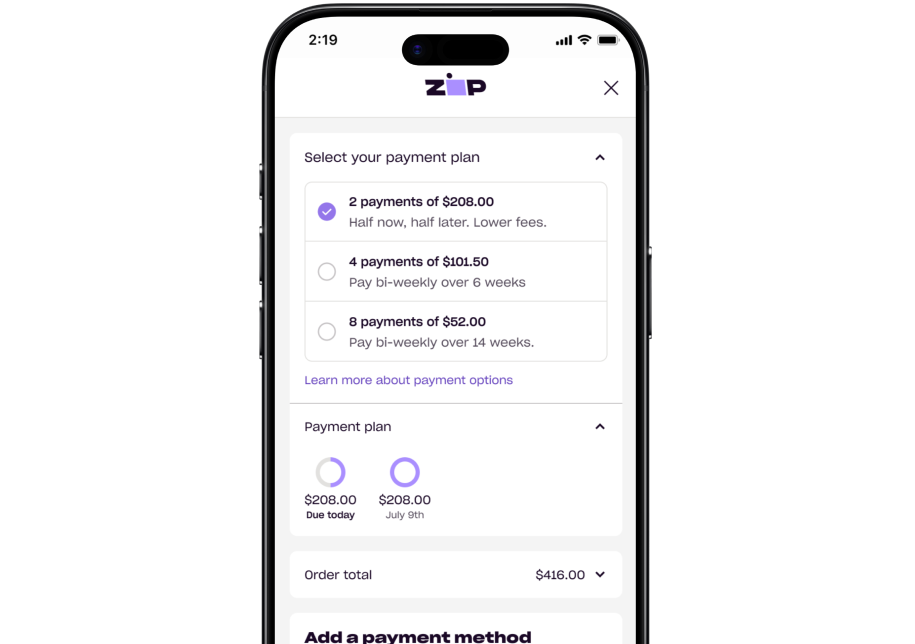
Buy now, pay later (BNPL) lets shoppers split a purchase into installments instead of paying the full amount at checkout. The option is common in online stores and shopping apps, where a provider may offer four payments over six weeks or a longer monthly financing plan. A pay-in-four offer may have no interest if payments are made on time, but that does not make every BNPL plan free or risk-free.
The biggest mistake is judging the purchase by the first installment rather than the full amount and the dates when every payment is due. Several small plans can overlap, late fees can accumulate, automatic payments can trigger bank overdraft fees and some longer plans charge interest. Here is how BNPL works, what to check and how the rules around credit reporting are changing.
How buy now, pay later works at checkout

In a typical pay-in-four plan, the shopper pays one installment at checkout and the remaining three installments over the following weeks, often every two weeks. The BNPL company pays the merchant under its agreement and collects the installments from the shopper. The exact schedule, payment method and fees depend on the provider and the specific plan.
Longer-term BNPL products work more like traditional installment loans. They may spread a purchase over several months and charge interest, sometimes at rates that vary with the borrower’s eligibility. A provider may show a zero-interest option alongside longer plans with an APR. The term “buy now, pay later” covers both short pay-in-four loans and a wider range of point-of-sale financing, so the label alone does not tell you the cost.
Providers may use a soft credit inquiry, internal repayment history or other information when deciding whether to approve a purchase. A soft inquiry generally does not affect a credit score, but approval is not guaranteed. Some longer-term plans may involve a hard inquiry or different credit-reporting practices. The Consumer Financial Protection Bureau explains the basic structure in its BNPL loan guide.
The Federal Reserve’s August 2026 Consumer and Community Context report focuses on pay-in-four loans and explains how they differ from longer installment products. It notes that these loans are commonly split into four equal payments over six weeks, with a first payment at purchase and three later installments. Read the Federal Reserve’s 2026 BNPL analysis for more detail.
BNPL fees, missed payments and how it can affect your credit

Late fees: Many pay-in-four providers charge a fee when an installment is missed, although the amount and rules differ. Some may pause further purchases or send an unpaid balance to collections. The CFPB warns that missed payments can create additional costs and that a debt sent to collections may be reported to a credit bureau.
Bank fees: Automatic withdrawals can create a separate problem. If the linked debit card or bank account does not have enough money when a payment is due, the bank may charge an overdraft or non-sufficient-funds fee. A BNPL plan advertised as interest-free can therefore still cost money if the payment timing does not match the shopper’s cash flow.
Interest: Longer plans can charge APR, and the total amount repaid can be substantially higher than the purchase price. Check the APR, number of payments, total of payments, down payment and whether a late or returned-payment fee applies. Do not assume that an interest-free pay-in-four offer means every product from the same provider is interest-free.
Credit reporting: Reporting practices are changing and vary by provider and bureau. The Federal Reserve’s 2026 analysis says most pay-in-four lenders historically did not report these loans to credit bureaus. TransUnion says that starting in October 2026, select BNPL and point-of-sale loan data may be shared with lenders and could influence some credit decisions, even though that data does not currently affect TransUnion credit scores. Other bureaus and scoring models may handle the information differently. See TransUnion’s October 2026 update.
The Fed’s 2026 report also found that 26% of BNPL users said they had paid late at least once in the prior year, and 17% said they had been charged extra for late payment. Those figures cover surveyed BNPL users, not every borrower or every purchase. They show why it is important to track the entire repayment schedule rather than assuming small installments are harmless.
For more on credit history and scoring, see The Immortal Times guide to the five factors that affect your credit score.
How to use BNPL without getting buried in payments

Add up every active plan. Before checking out, list the amount and due date for each installment you already owe. Four separate purchases can create several payment dates in the same week. A small payment can be difficult to manage when it arrives alongside rent, utilities, insurance and other bills.
Budget for the full price. Ask whether you could afford the item if the BNPL option disappeared. If the purchase only seems possible because the first installment is small, consider waiting, saving or choosing a less expensive option. BNPL spreads the cost; it does not reduce it.
Read the contract before accepting. Confirm the payment schedule, APR, late fees, returned-payment fees, refund process and how the provider handles disputes. If the product arrives damaged or a merchant refuses a return, find out whether you must continue paying while the dispute is reviewed. Keep receipts, order confirmations and support messages.
Use reminders and maintain a payment buffer. Set calendar alerts before each due date and keep enough money in the linked account to cover automatic withdrawals. Do not rely only on a push notification from the provider. If you think you will miss a payment, contact the provider as soon as possible and ask what options are available.
Do not use multiple providers to hide the total debt. The CFPB’s research on BNPL found that loan stacking across firms is difficult to measure because many loans historically were not reported to nationwide credit bureaus. That makes it especially important to track your own balances. A lender’s approval of a new purchase does not mean the payment fits your budget.
BNPL can be useful when the schedule is clear, the purchase is planned and the borrower can comfortably make every payment. It becomes risky when shoppers use it to cover recurring essentials, stack several plans or choose a longer loan without checking the APR. Treat each plan as debt, read the terms and make the decision based on the full cost—not the size of the first payment.




Leave a Reply