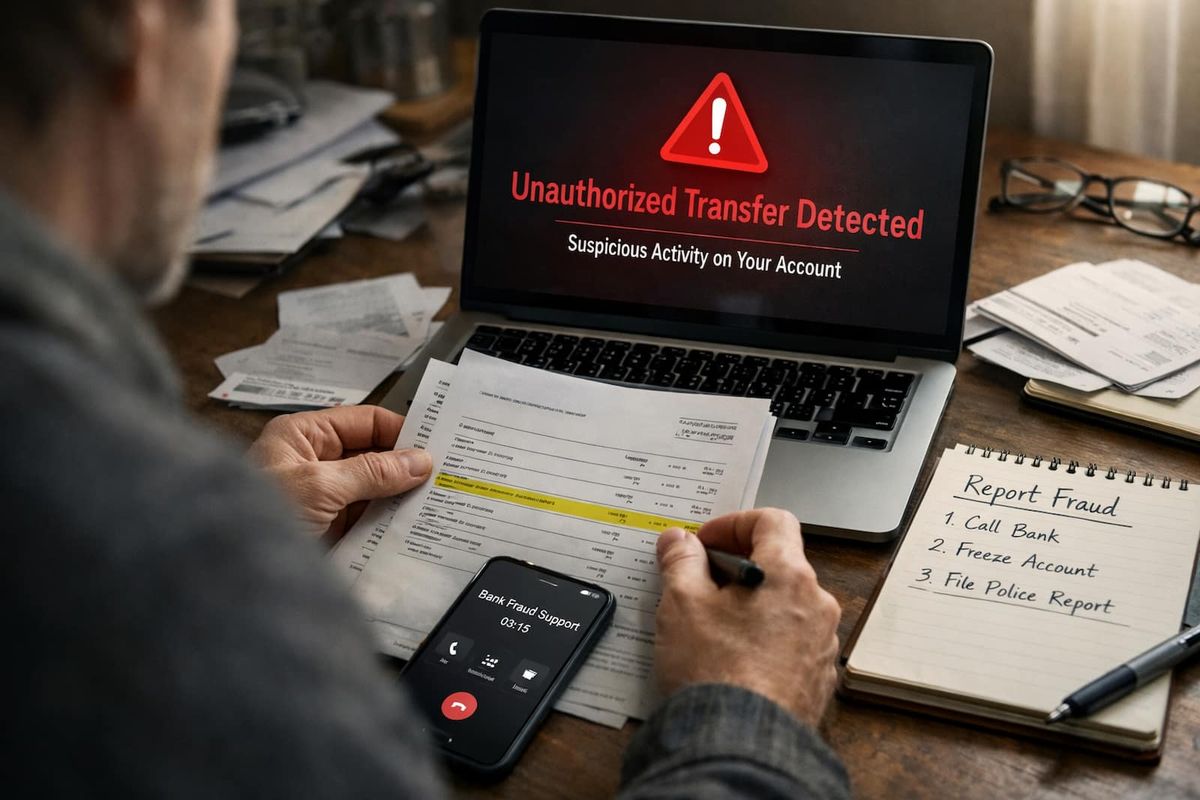
Discovering that someone has opened an account in your name, used your Social Security number or accessed your bank account can feel overwhelming. The most important thing is to act in the right order: secure the accounts that can still be accessed, stop additional credit applications, report the identity theft and create a record of every dispute. You do not have to solve everything in one call, but you should start quickly.
The Federal Trade Commission’s IdentityTheft.gov service can create a personalized recovery plan based on what happened. The steps below explain what to do first, how to protect your credit and how to follow up with banks, credit bureaus and government agencies.
What to do immediately after discovering identity theft

1. Contact the bank or company involved. If money is missing or a card, account or payment app has been accessed, contact the institution using the phone number on its official website or the back of your card. Ask it to block unauthorized transactions, secure the account, replace compromised cards or account numbers and explain how to dispute the activity. Report unauthorized transfers promptly because legal protections and deadlines can depend on the type of account and how quickly you notify the institution.
2. Secure your email and important logins. Your email account can be the key to resetting passwords elsewhere. Change its password from a trusted device, sign out of unfamiliar sessions, review recovery phone numbers and email addresses, and turn on multifactor authentication. Then update passwords for banking, payment apps, shopping accounts and other services that reused the same or a similar password.
3. Place a credit freeze. If your Social Security number or other identifying information may have been used to open accounts, freeze your reports at Equifax, Experian and TransUnion. A freeze is free and helps prevent many new-credit applications from being approved. You must contact each bureau separately. The Immortal Times has a step-by-step guide to freezing credit at all three bureaus.
4. Check the accounts you already have. Review recent bank, credit-card, mobile-phone and utility statements for unfamiliar charges, address changes, new authorized users or password resets. Do not assume that the first suspicious transaction is the only one. Ask the institution whether it can add extra verification to the account while the investigation is open.
Keep a simple incident log. Record the date you noticed the problem, the company you contacted, the person or department you spoke with, the case number, what was promised and when you need to follow up. Save letters, emails, screenshots and copies of any reports. This documentation becomes important if a creditor, debt collector or bureau later disputes what happened.
Report the identity theft and dispute fraudulent accounts

Go to IdentityTheft.gov and answer the questions about what happened. The FTC can generate an Identity Theft Report and a personalized recovery plan. Follow the instructions for the type of identity theft involved—such as a fraudulent credit card, bank account, tax return, government benefit or phone account.
If a fraudulent account appears on a credit report, contact the credit bureau showing the information and the company that supplied it. Dispute the account as identity theft and provide the documents requested through the official process. Include the FTC Identity Theft Report when appropriate. Keep copies of every dispute and confirmation. You can obtain free credit reports through AnnualCreditReport.com and check all three bureaus because the fraudulent account may not appear on every report.
If a debt collector contacts you about a debt you did not create, do not ignore the notice. Dispute the debt in writing within the applicable deadline and explain that it resulted from identity theft. Ask for information about the original creditor and the account. Do not acknowledge responsibility for a debt that is not yours, and keep copies of the letter and delivery confirmation.
You may also place an initial fraud alert with one of the three credit bureaus. The bureau you contact must notify the other two. A fraud alert asks lenders to take extra steps to verify your identity before opening new credit. It is different from a freeze, which restricts most access to the report for new-credit decisions. Both tools are free.
Some cases require a separate government response. If someone used your information to file a tax return or claim a refund, follow the IRS identity-theft instructions and consider requesting an Identity Protection PIN (IP PIN). If Social Security information or benefits are involved, contact the Social Security Administration through its official website. If a driver’s license or state identification card was compromised, contact the issuing state agency for instructions.
The FTC’s identity theft recovery guide explains how to report the incident and work with businesses and credit bureaus. For IRS-related cases, use the agency’s Identity Theft Central rather than links sent in unexpected messages.
How to recover your identity and prevent another incident

Recovery can take more than one round of calls. Check the status of each bank investigation, credit dispute and government report. If a company rejects a dispute, read the explanation, compare it with your evidence and follow the bureau’s or regulator’s instructions for next steps. You can submit a complaint to the CFPB for certain problems involving financial products, and to the FTC for identity-theft reporting and consumer-protection issues.
Continue monitoring all three credit reports for new accounts, unfamiliar addresses, hard inquiries and collection notices. A freeze does not prevent every form of fraud, so also review existing bank and card accounts, tax records and benefits accounts. If you see a new problem, add it to your incident log and contact the affected organization immediately.
Be cautious of anyone who promises to erase identity theft for an upfront fee, asks for gift cards or cryptocurrency, or claims to work for the government and demands payment to unlock a recovery service. IdentityTheft.gov is a free federal resource. Use official contact information you locate independently, not a phone number in a suspicious email, text or social-media message.
Once the immediate problem is resolved, keep strong, unique passwords and multifactor authentication on important accounts. Consider using a password manager, enable transaction alerts and limit the personal information you share publicly. Shred or securely dispose of documents containing account numbers and identifying information, and be skeptical of unexpected requests for verification codes.
Identity theft can be disruptive, but it is possible to work through it methodically. Secure the accounts first, freeze your credit, create an official report, dispute fraudulent records and keep a written trail until each organization confirms the issue has been resolved. The process may take time, but an organized recovery plan gives you a clear next step at every stage.




Leave a Reply