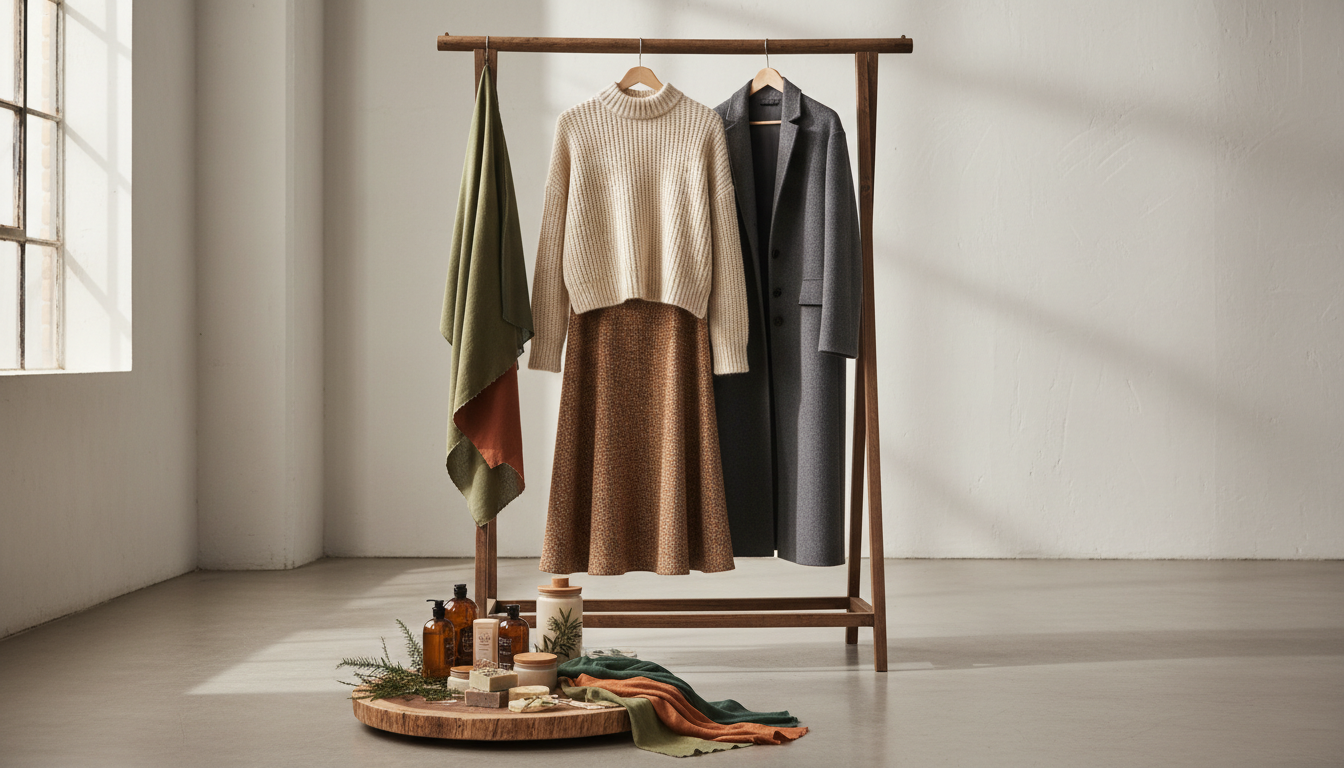
November brings the shift toward colder-weather dressing, holiday events and a fresh wave of seasonal beauty launches. But this month’s fashion conversation is not only about what looks good. Industry coverage is also highlighting the materials behind clothing, the people who make it and the sourcing of everyday beauty ingredients.
Winter style is moving toward texture and statement details

Recent seasonal shopping coverage points to a mix of practical layers and expressive pieces: printed coats, wide-cuffed denim, close-fitting leather or suede boots, textured sweaters and statement accessories. These are easy ideas to adapt without replacing an entire wardrobe. A strong coat or a different silhouette can change the feel of familiar basics.
For holiday dressing, richer textures and carefully chosen shine offer an alternative to buying a completely new outfit. The useful takeaway is to look for pieces that can work beyond one event: a jacquard dress that can be styled casually later, or a standout accessory that refreshes clothes already in the closet.
Sustainability is about more than a label

Several developments reported this month show how brands are experimenting with materials and production. Triarchy and WTRLSS have introduced a denim collaboration using a digital dyeing process that the partners say can sharply reduce water use. Armedangels has also received attention for a windbreaker designed without fossil-fuel-derived fibres.
Other examples include E.L.V. Denim reworking fabric offcuts into a collection and Patagonia placing secondhand and new clothing alongside each other online. These efforts are not identical, and a brand’s sustainability claims still deserve scrutiny. Consumers can look for specific information about materials, manufacturing, durability and independent verification rather than relying on broad green language.
Beauty supply chains deserve attention too

Beauty products also depend on global agricultural supply chains. A recent assessment highlighted human-rights risks connected with ingredients such as cocoa, palm oil, shea and coconut. That does not mean every product containing these ingredients is produced through abuse. It does show why traceability and responsible sourcing matter in cosmetics just as they do in clothing.
How to use these trends without overspending

- Start with what you own: build outfits around existing basics before buying seasonal pieces.
- Choose versatility: prioritize coats, shoes and layers that work across multiple settings.
- Check the claims: look for named materials, measurable targets and credible reporting.
- Buy for wear: construction, repairability and how often an item will be used matter.
- Ask beauty brands questions: ingredient sourcing and supplier standards are part of product quality.
The most interesting November trend may be a more informed approach to shopping. Style still matters, but so do value, longevity and the story behind the product.
Sources

- Who What Wear: Winter fashion pieces to consider in November 2026
- Good On You: Sustainable fashion and beauty news for November 2026
Related Reading



Leave a Reply