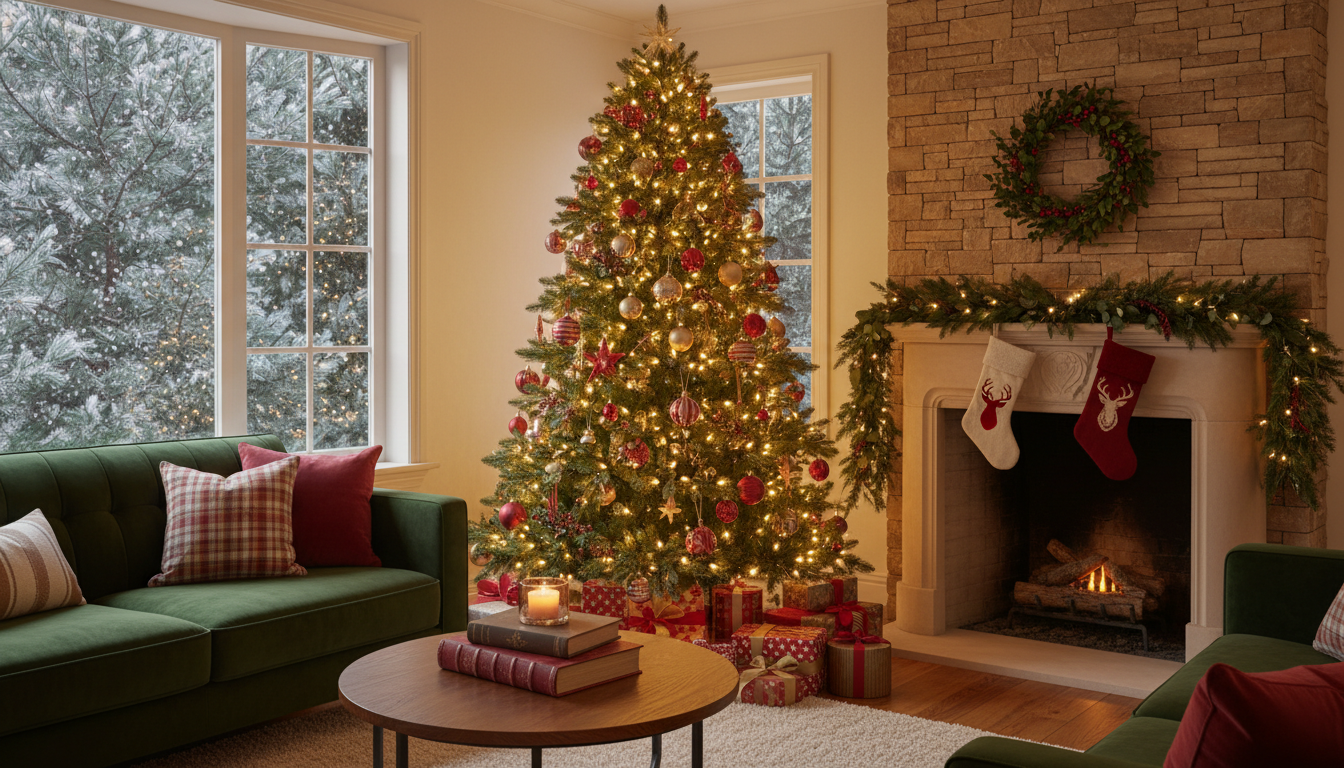
Holiday decorating has become one of the internet’s biggest seasonal obsessions, and the shift is happening earlier than many people expect. By the time Halloween decorations came down, Christmas trees, oversized bows, nostalgic ornaments and cozy living-room transformations were already dominating social feeds. The trend is not just about putting up a tree early. It reflects how people are using their homes to create a feeling, share their personality and make the holiday season last longer.
Christmas decor is already a major social-media moment

Social-trend tracking published for the 2026 season recorded approximately 207.4 million views for Christmas-decor content in the United States between October 3 and October 30, with thousands of creators contributing videos. The same tracker reported that Halloween decorations generated roughly 214.3 million views. Those figures are platform-tracking estimates rather than a count of every post on the internet, but they show just how much attention seasonal home content is attracting.
The most shareable posts tend to have a clear visual payoff: an undecorated room transformed into a holiday setup, a tree reveal, a handmade centerpiece or a simple change that makes a space feel warmer. Short before-and-after clips are especially easy for viewers to understand and share. They also give creators a natural reason to invite comments by asking which look people prefer.
The look of 2026: nostalgia, texture and personality

Holiday decorating coverage for 2026 points toward a mix of familiar and playful styles. Good Housekeeping highlighted nostalgic 1990s references, classic plaid, woodland details and pink accents among the looks designers are watching. Faire’s 2026 retail trend report also noted increased interest in tartan and plaid, ceramic Christmas trees, knit and crochet details, tinsel, glass ornaments and vintage-inspired pieces.
That combination helps explain why there is no single holiday aesthetic taking over. Some homes are leaning into traditional red-and-green decorating, while others are choosing softer colors, dramatic lighting, handmade pieces or eclectic displays that feel collected rather than purchased all at once. The common thread is personality: people want a room that looks good on camera but still feels like their own home.
Why are people starting earlier?

Starting early can be about more than social-media pressure. A holiday-season survey reported by Martha Stewart found that some shoppers begin buying gifts, crafting and decorating before November. Among respondents who celebrate, 24% said they start decorating before November. The report also found that people who start early often want to reduce the stress of December and spread expenses across multiple paychecks.
There is also a practical side. Decorating in stages gives households more time to compare prices, reuse items they already own and make do-it-yourself pieces without rushing. For families who enjoy hosting, an early start can make it easier to plan a welcoming space before calendars fill up with parties and travel.
How to try the trend without overspending

The viral version of holiday decorating can make it look as if every room needs a complete makeover. It does not. Start with one focal point, such as the front door, a mantel, a small tree or the dining table. Reuse decorations from previous years, add one new color or texture, and use lighting to make the room feel different without replacing everything.
It is also worth separating inspiration from shopping pressure. A beautiful creator setup may involve gifted products, professional lighting or a larger budget than the video makes obvious. Save ideas that fit your space and spending limit rather than trying to recreate every viral room exactly.
The bottom line

Early Christmas decorating is more than a passing social-media challenge. It brings together nostalgia, home improvement, creative self-expression and the desire to make a busy season feel less stressful. The biggest trend may not be a particular ornament or color at all. It is the idea that people want their homes to feel festive on their own schedule. Whether the decorations go up in October, November or the week before Christmas, the best version is the one that makes the space feel welcoming without creating financial pressure.
Sources

- Convosight: Christmas decor social trend tracking and view estimates
- Good Housekeeping: The biggest Christmas decor trends of 2026
- Faire: Independent Retail Pulse holiday trends 2026
- Martha Stewart: 2026 holiday trends and early decorating survey


Leave a Reply