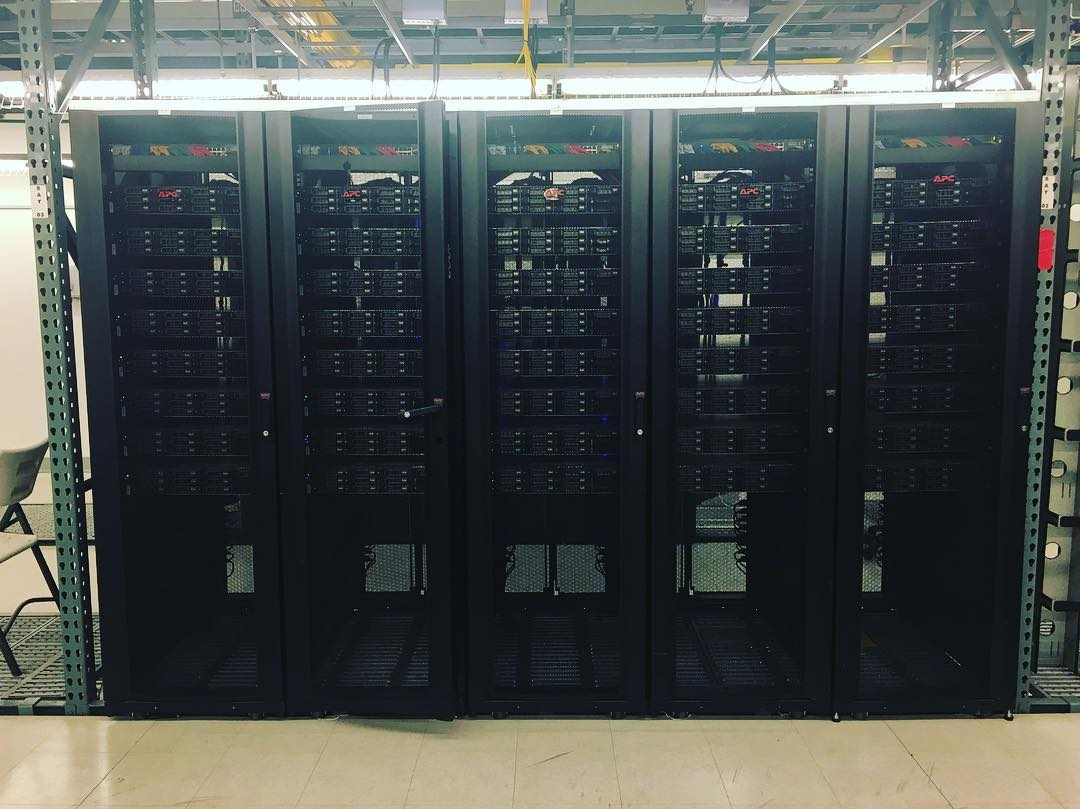

The fight over artificial intelligence infrastructure is moving beyond technology companies and into the politics of electricity bills, water supplies and where the next generation of data centers can be built. President Donald Trump has threatened a heavy tax on U.S. companies that construct AI data centers overseas, arguing that the infrastructure should be built at home. But the announcement arrives as many communities are questioning whether large data centers should be built near them at all.
The tension is straightforward: the United States wants to expand computing capacity to compete in AI, but the facilities require land, power, cooling and grid connections. Residents want to know whether the projects will create lasting local benefits—or leave households paying more for electricity and infrastructure. The debate is now being shaped by federal policy, a new Senate permitting bill and local opposition.
What Trump said about companies building AI data centers abroad

In comments reported by the Associated Press on November 21, Trump threatened a “tremendous tax” on American technology companies that build AI data centers overseas. He framed domestic construction as important to maintaining the country’s technological lead over China. The proposal was not accompanied by a formal policy, tax rate, implementation timetable or detailed enforcement plan. AP reported that Trump had not yet discussed the idea with staff.
That distinction is important. The threat is a political signal, not a tax rule companies can currently calculate or a law that has already taken effect. Any eventual policy would need details about which companies, projects, foreign locations and investment activities it covers. Until those details exist, businesses and investors should not treat the statement as a completed regulatory change.
The question also goes beyond where a server building sits. AI infrastructure depends on specialized chips, power equipment, cooling systems, construction materials and skilled labor. A facility built in the United States may still rely on global supply chains, while an overseas facility operated by an American company may serve customers across several markets. The policy debate is therefore about both domestic investment and the international structure of the AI industry.
Why local communities are pushing back on data center projects

The most immediate local concerns are electricity demand, water use, noise, land and the transparency of development agreements. Data centers run computing equipment around the clock, and the heat produced by that equipment has to be removed. Depending on the facility, cooling can involve air systems, liquid cooling or water-based processes. The local impact depends on the design, climate, power source and water supply—not every data center has the same footprint.
The University of Pennsylvania’s Annenberg Public Policy Center reported in August that 61% of U.S. adults opposed construction of new data centers in their area, up from 49% in a survey conducted earlier in the year. Its nationally representative survey included 1,320 U.S. adults and was fielded from June 16 to July 19, 2026. That is a measured survey result; it should not be confused with other polls that use different questions or samples.
The energy question is not theoretical. The Department of Energy’s summary of the 2025 Lawrence Berkeley National Laboratory report says data centers could account for 11.8% of total U.S. electricity use by 2030 in its central estimate, with scenarios ranging from 9.5% to 15.3%. Those are projections, not a statement that data centers already consume that share today.
Water use also varies widely. A Congressional Research Service report explains that cooling design, local climate and access to water shape a facility’s direct water consumption. The report cites estimates that U.S. data centers directly used about 17 billion gallons of water in 2023, while noting that facility-level information is limited and local impacts depend on regional water conditions. Communities often want project-specific figures before approving a development.
What the Senate’s new energy bill could change

The policy debate is not limited to the White House. On November 19, the Senate passed the Bipartisan American Affordability and Jobs Act of 2026 by a 62–33 vote. The bill would accelerate reviews for certain energy and infrastructure projects and require large data centers to cover more of the electricity and grid costs associated with their demand. It now goes to the House, where its future remains uncertain.
The legislation is an attempt to address two competing pressures at once: the need to build more energy infrastructure and the concern that existing customers could be left paying for upgrades driven by large new loads. Supporters say faster permitting and clearer cost allocation could help expand supply and reduce delays. Critics argue that the bill could weaken environmental review, limit public input and make it easier to approve projects with long-term local consequences.
The Senate vote does not mean the bill is law. The House must still consider the measure, and the final text could change. Even if it advances, the details of how regulators implement ratepayer protections and how project costs are assigned will matter more to communities than the headline vote alone.
For residents evaluating a proposed facility, the practical questions are specific: How much electricity will it require at peak and on average? Who pays for substations and transmission upgrades? What water source will be used? How much noise will cooling equipment create? Will the company publish its resource use and emergency plans? And what local tax revenue, jobs or infrastructure commitments are enforceable rather than promotional promises?
The technology industry’s response will also matter. AP reported that companies such as Google and Meta have been offering more transparency and community assurances as resistance grows. Tax breaks, lower utility bills, community funding and direct payments may help secure local support, but communities will still need independent information about the costs and long-term effects.
Bottom line:

The AI data-center debate is becoming a contest over who benefits from the next wave of computing—and who pays for its physical footprint. Trump’s overseas-tax threat is still only a proposal in broad terms, while the Senate permitting bill has passed one chamber but not Congress. The strongest pressure point for the industry may be local: communities increasingly want clear answers on electricity, water, costs and public accountability before they agree to host major facilities.
Sources:

Associated Press: Trump threatens tax on U.S. companies building AI data centers overseas; Associated Press: Senate passes energy permitting bill; U.S. Department of Energy: Data Center Energy Usage Report summary; Annenberg Public Policy Center: Opposition to local data centers rises sharply; Congressional Research Service: Data Centers and Water. Related coverage: Nvidia’s latest earnings and AI chip demand.
Policy status and survey figures checked November 21, 2026. The Senate bill has not become law, and the overseas tax threat has not been issued as a formal policy.




Leave a Reply
You must be logged in to post a comment.