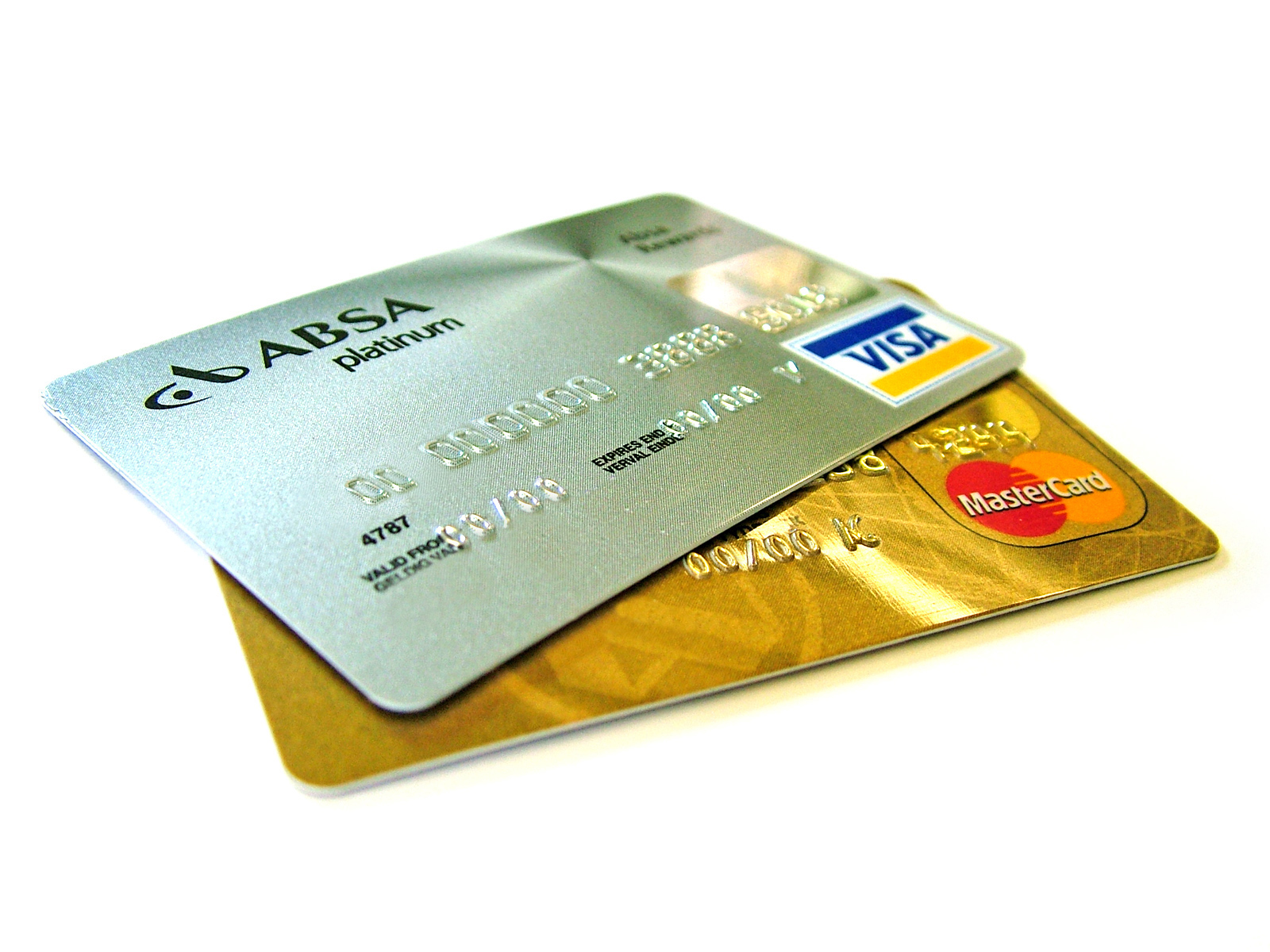
Paying the minimum on a credit card feels responsible. The bill gets paid, no late fee lands, your account stays in good standing. But run the actual numbers on a $1,000 balance at today’s average interest rate and the minimum payment is the most expensive way to pay it: $1,788 in total, spread over 71 months — nearly six years — with $788 of that going to interest alone.
That is the minimum payment trap. The payment is designed to shrink as your balance shrinks, which quietly stretches a small debt across most of a decade. Here is exactly how it works, what it costs at $1,000 and at $5,000, and the simple fix — pay a fixed amount instead of a shrinking one — that cuts the cost dramatically.
The math in this article uses the Federal Reserve’s average APR for interest-assessed credit card accounts, 22.36% (August 2026), and the most common minimum-payment formula: that month’s interest plus 1% of the balance, with a $25 minimum floor. It assumes no new charges and no fees. Your card’s exact figures will differ slightly, but the shape of the trap is the same on every card.
What happens if you only pay the minimum payment on a credit card?

Three things happen, and only one of them is good.
The good part: you avoid late fees and a missed-payment mark on your credit report. The bad parts take longer to notice. First, most of your early payments go to interest, not to the balance — on a $1,000 balance at 22.36% APR, just $10 of your first $28.63 minimum payment actually reduces what you owe. Second, because the payment is recalculated from your balance every month, it drops as the balance drops, so the payoff slows down instead of speeding up. Third, your balance stays high for years, which keeps your credit utilization elevated — one of the factors that weighs on your credit score, as our guide to what affects your credit score explains.
Your statement is required to show you this. Under federal rules, every credit card statement carries a minimum payment warning box that states how long it will take to pay off the balance making only minimum payments, and what it will cost in total. Most people never read it. The numbers below are what that box is trying to tell you.
How is a credit card minimum payment calculated?

Most major issuers use the formula the Consumer Financial Protection Bureau describes as the common method: the month’s interest charge plus 1% of the balance, with a floor — typically $25 — once the balance gets small. Some issuers use 2% or 3% of the balance plus interest instead, which pays the debt off somewhat faster but works the same way.
Watch what that formula does in month one of a $1,000 balance at 22.36% APR:
- Interest for the month: $1,000 × 22.36% ÷ 12 = $18.63
- 1% of the balance: $10.00
- Minimum payment due: $28.63 — of which only $10 touches the debt
Next month the balance is $990, so the payment is recalculated slightly lower. And the month after that, lower again. The payment is engineered to feel easier over time — $28.63 becomes $25, then the $25 floor — while the calendar stretches out behind it. That shrinking payment, not the interest rate alone, is the trap.
How long does it take to pay off $1,000 if you only pay the minimum?

71 months — five years and eleven months — assuming you never charge another dollar to the card.
The slow start is the deceptive part. After a full year of on-time minimum payments, you have sent the card company $325 — and your balance has only fallen from $1,000 to $886, because $212 of what you paid went straight to interest. After three years of payments totalling $926, you still owe $632. The balance only starts falling quickly near the very end, when the $25 floor finally becomes a meaningful share of what remains.
Put a fixed payment next to it and the contrast is stark, which is why the same $1,000 looks like a completely different debt depending on how you choose to pay it.
Minimum payment vs. $50 vs. $100 a month: the payoff table

Same $1,000 balance, same 22.36% APR, no new charges. The only thing that changes is the payment strategy:
| Payment strategy | Monthly payment | Time to debt-free | Interest paid | Total paid |
|---|---|---|---|---|
| Minimum payment only | $28.63, shrinking to the $25 floor | 71 months (5 yrs 11 mos) | $788 | $1,788 |
| Fixed $50 a month | $50 every month | 26 months (2 yrs 2 mos) | $263 | $1,263 |
| Fixed $100 a month | $100 every month | 12 months | $117 | $1,117 |
Paying a flat $50 — about $21 more than the first minimum payment — makes you debt-free 45 months sooner and saves $525. Doubling it to $100 clears the balance in a single year and saves $671. Nothing about the card changed. The rate is identical. The only difference is that a fixed payment does not shrink underneath you.
What a $5,000 balance really costs on minimum payments alone

Scale the balance up and the trap stops looking like a nuisance and starts looking like a second rent payment. A $5,000 balance at 22.36% APR, paid at the minimum only:
- 231 months — 19 years and 3 months — to pay off
- $8,241 in interest, on top of the $5,000 itself
- $13,241 total paid for $5,000 worth of spending
The interest alone is more than one and a half times the original balance. And the first year fools you the same way: after twelve on-time payments totalling $1,627, the balance has only dropped to $4,432, because $1,059 of that money went to interest.
Balances like this rarely arrive in one dramatic purchase. They accumulate — a car repair here, a holiday season there. It is exactly the kind of slow build our holiday budget guide to planning spending without debt is designed to prevent, because once the balance exists, the minimum payment makes sure it stays.
The $50 fix: freeze your first minimum payment

You do not need a windfall to beat this. You need one rule: whatever your first minimum payment is, keep paying that exact amount every month, even as the statement minimum falls.
On the $5,000 balance, the first minimum payment is $143.17. Freeze it there — set an automatic payment of $143.17 and ignore the shrinking minimum on the statement — and the same debt is gone in 57 months instead of 231, with interest cut from $8,241 to $3,158. That is roughly $5,083 saved and fourteen and a half years of payments erased, without paying a single dollar more than the first month already asked for.
On a $1,000 balance, the first minimum is only $28.63, so round it up to a clean $50 — the “fix” in the table above — and you are done in 26 months. If $50 is genuinely impossible, freeze the $28.63 anyway: a frozen minimum still beats a shrinking one, because every month the balance falls, a bigger share of that fixed payment goes to principal instead of interest. The math starts working for you instead of against you.
Two supporting moves make the fix stick. Stop adding new charges to the card while you pay it down — a balance cannot shrink while it is still being fed, which is why the classic advice to cut up or freeze the card exists. And if your credit is in decent shape, call the issuer and ask for a lower APR; even a few points off the rate shortens every timeline in this article. A $5,000 balance paid at $200 a month, for example, is gone in 34 months with $1,793 in interest — proof that the payment amount, not willpower, is the lever.
How to get out of the minimum payment trap: a 5-step payoff plan

- Find your real minimum. Look at this month’s statement and note the minimum payment due — and read the warning box beside it showing the minimum-only payoff time and total cost.
- Set a fixed automatic payment. In your card’s app or website, replace the “pay minimum” autopay with a fixed dollar amount: your first minimum, rounded up to the nearest $10 or $50 you can sustain.
- Stop feeding the balance. Remove the card from shopping sites and your phone wallet, and use a debit card or cash while the payoff runs.
- Send windfalls to principal. Tax refunds, overtime, a sold item — any extra payment goes straight to the balance, and note it as a principal payment if your issuer gives you the option.
- Re-run the numbers quarterly. As the balance falls, check your payoff date. Watching the date move closer is what keeps the plan alive — and if your budget loosens, step the fixed payment up once. Building the payment into a written plan, the way our guide to building a personal budget that actually works lays out, makes it a line item instead of a hope.
One caution on shortcuts: 0% balance-transfer offers can help, but they usually charge a 3%–5% transfer fee and the debt returns to a high APR if it is not cleared inside the promotional window. The fixed-payment method above costs nothing and works on the card you already have.
Bottom line: The minimum payment is not a payoff plan — it is a pricing plan, and the price is steep. At the Federal Reserve’s average APR of 22.36%, a $1,000 credit card balance paid at the minimum only takes 71 months and costs $1,788; a $5,000 balance takes 19 years and costs $13,241, including $8,241 of interest. The escape is unglamorous and immediate: freeze your payment at a fixed amount — $50 a month clears the $1,000 balance in 26 months and saves $525 — and stop letting the payment shrink. The card company recalculates your minimum every month. Nothing says you have to accept the recalculation.
Sources:
- Federal Reserve — Consumer Credit (G.19), average APR on accounts assessed interest
- Consumer Financial Protection Bureau — Credit cards: paying your bill and minimum payments
- How long to pay off a credit card with minimum payments — MicroToolsDaily
- Credit card minimum payment: how it works — SenseCalc
- How long to pay off a card on minimum payments — FinanceCalco
Payoff figures calculated November 22, 2026, using a 22.36% APR and a minimum payment of interest plus 1% of the balance with a $25 floor, assuming no new charges or fees. Figures are illustrative examples, not financial advice; check your own statement’s minimum payment warning for your card’s exact numbers.
Don’t stop here. Explore more stories from The Immortal Times.


Leave a Reply
You must be logged in to post a comment.