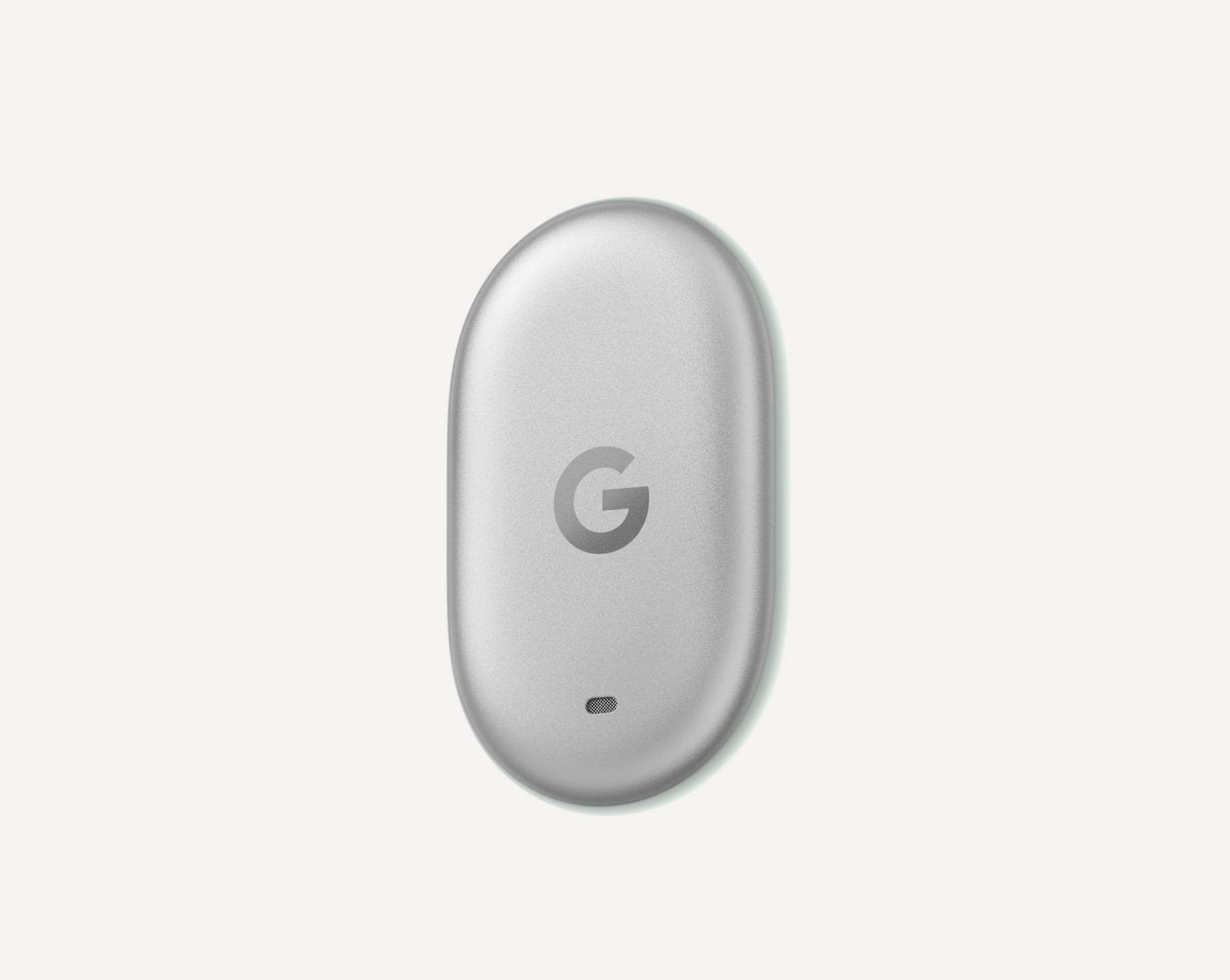
Quick answer: the Google Pixel Tag costs $29.99 for one or $99.99 for a four-pack, and it went on sale on November 11, 2026 through the Google Store. It is Google’s first own-brand item tracker — an oval, stainless-steel tag that works with Android’s Find Hub network to track keys, bags and luggage, with Ultra Wideband Precision Finding on compatible phones, a built-in speaker, a physical button, IP67 water resistance and a replaceable CR2032 battery rated for up to a year. It was first announced in August 2026 alongside the Pixel 11 lineup. Here is what it does, how it compares with Apple’s AirTag, and who should actually buy one.
Pixel Tag Price, Release Date and Specs

The pricing deliberately mirrors Apple: $29.99 for a single Pixel Tag and $99.99 for a four-pack in the United States, sold in a silver shade Google calls Fog. (The Google Store briefly showed a second, pale green option on launch day before the listing settled on Fog only, per TechCrunch’s updated report.) The tag itself is an elongated oval rather than AirTag’s disc: 1.1 inches wide and 1.8 inches tall, just 0.2 inches thick, and 0.4 ounces with the battery fitted. That slimness is the design pitch — it slides into a wallet or a bag’s flat pocket more easily than a thicker round tag.
The body is stainless steel and rated IP67 for dust and water resistance, which Google specifies as a maximum depth of 1 meter for up to 30 minutes. Like the AirTag, it has no built-in keyring hole, so attaching it to keys means a case or holder — accessory maker Bellroy launched keychain cases alongside the tag on the Google Store. Pairing is through Fast Pair, and Google says the tag works with phones running Android 9 or newer.
How Pixel Tag Works: Find Hub, UWB and Precision Finding

Pixel Tag lives in Google’s Find Hub app, the same place Android already tracks lost phones and other devices. Up close, it connects over Bluetooth, and its built-in speaker can play a chime — with three loudness levels in settings, topping out around 80 decibels — so you can hunt by ear. On phones with Ultra Wideband, Precision Finding adds visual distance and directional guidance, walking you to the tag rather than just telling you it is nearby. Google also lists Bluetooth Channel Sounding support, which requires a compatible device on Android 16 or later with Bluetooth 6.0.
Far away, the tag leans on the crowd. Find Hub taps a crowdsourced network of more than a billion Android devices worldwide: when someone else’s Android phone passes your lost tag, it can relay the tag’s location back to you on a map, the same basic model as Apple’s Find My network. If you mark a tag as lost, it can share your email, phone number and a short message with whoever finds it. Google also added NFC — not mentioned at the August announcement — so a finder can tap the tag to reach its details screen in Find Hub. Location can be shared with up to 10 people in the app, double the five an AirTag allows, which suits shared items like family car keys.
One feature cuts the other way: if you lose your phone, pressing the Pixel Tag’s button twice rings it. That physical button is also how several tag functions are triggered, and it is the most obvious design difference from Apple’s button-free disc. It fits the same direction as Google’s wider push to make its devices act on your behalf — the theme we covered in “Microsoft’s MAI Models at Ignite 2026” on the software side, and in Google’s own ecosystem in “Apple HomeView: Price, Features and Privacy“‘s rival smart-home play.
Pixel Tag vs. AirTag: Size, Features and Price Compared

Side by side, the two tags are closer than the branding suggests. Price is a wash: $29.99 against the AirTag’s $29, and $99.99 against $99 for four-packs. Both use Bluetooth plus Ultra Wideband for precision finding, both have a speaker, both run on a replaceable CR2032 rated around a year, and both rely on a giant crowdsourced network — Find Hub’s billion-plus Android devices against Apple’s Find My network of iPhones.
The differences are shape, ecosystem and a few features. The Pixel Tag is slimmer (0.2 inches against the AirTag’s 0.31) but taller, at 1.8 inches against 1.26. It adds a physical button and phone-ringing, and it shares its location with twice as many people. The AirTag’s network is denser in the United States simply because iPhones are everywhere, while Find Hub’s strength grows with Android’s global footprint. Neither tag works across the fence: Pixel Tag is Android-only, AirTag is iPhone-only, so for most buyers the phone already in their pocket settles the comparison before the spec sheet does. Early hands-on coverage made the same point about networks that applies to every Find Hub tracker: performance was reliable in busy downtown areas and thinner on a quiet trail, where fewer passing phones means fewer location pings.
Battery, Durability and the Button AirTag Doesn’t Have

Battery life is the boring spec that decides whether a tracker is still alive the day you actually lose something. The Pixel Tag’s user-replaceable CR2032 coin cell is rated by Google at up to a year, matching the AirTag’s arrangement — when it fades, you swap a cheap coin cell rather than replacing the tag. The IP67 rating means rain, a spilled drink or a dunk in a puddle should not kill it, though it is water resistance, not waterproofing for swimming.
The button deserves one more mention because it changes daily use. Beyond ringing a lost phone with a double-press, a physical control makes the tag’s functions discoverable in a way a smooth disc is not — Google appears to have designed for buyers who never read a manual. Combined with Fast Pair setup, the pitch is a tracker a non-technical Android owner can have working in minutes.
Who Should Buy the Pixel Tag — and Who Should Wait

Buy it if you are an Android household that has watched AirTag owners track their luggage for years and wanted the same trick inside Google’s network. At $29.99 it is an easy stocking-stuffer price, the four-pack makes sense split across keys, a backpack and two suitcases, and holiday travel is exactly the use case where a last-seen location on a map beats an airline’s lost-bag form. Shoppers comparing it with other gadget gifts this season may also like our hands-on look at the “Xbox 25th Anniversary Controller: Price, Features and Whether It’s Worth It“.
Wait, or look sideways, if your phone lacks Ultra Wideband — without it you lose Precision Finding’s directional guidance, which is much of the point — or if you regularly lose things in rural areas, where any crowdsourced network thins out. Android owners should also glance at the Moto Tag 2 and Samsung’s Galaxy SmartTag2 (Galaxy phones only) and the cross-platform Chipolo and Pebblebee tags before deciding, since several rivals match the $30 price and some undercut it on sale. And iPhone owners should simply buy the AirTag: the Pixel Tag does nothing for them at all.
Bottom line: The Google Pixel Tag is a $29.99, on-sale-now AirTag answer for Android: Find Hub tracking over a billion-device network, UWB Precision Finding, an 80-decibel speaker, a phone-ringing button, IP67 resistance and a year-long replaceable CR2032 battery, in a slimmer oval body. It does not beat the AirTag on price or headline specs — it matches them, inside the other ecosystem. For Android users, that match is the whole story, and it has been a long time coming.
Sources:
- Pixel Tag, Google’s $30 Android-ready answer to Apple’s AirTag, is now available — TechCrunch
- Google takes on AirTag with the new $29 Pixel Tag — TechCrunch
- Google Pixel Tag is finally here — Android Authority
- Google Unveils $29 Pixel Tag to Take On Apple’s AirTag — MacRumors
- Google Pixel Tag (GA12506) Price, Specs: UWB, IP67, Find Hub — Tech Stories India (retail listings)
Reporting status checked November 22, 2026. Prices are U.S. list prices at the November 11, 2026 on-sale date; retail discounts may vary. Reports differ on whether NFC was part of the original announcement — TechCrunch updated its coverage to confirm NFC support, and this article follows that updated reporting.
Don’t stop here. Explore more stories from The Immortal Times.




Leave a Reply
You must be logged in to post a comment.