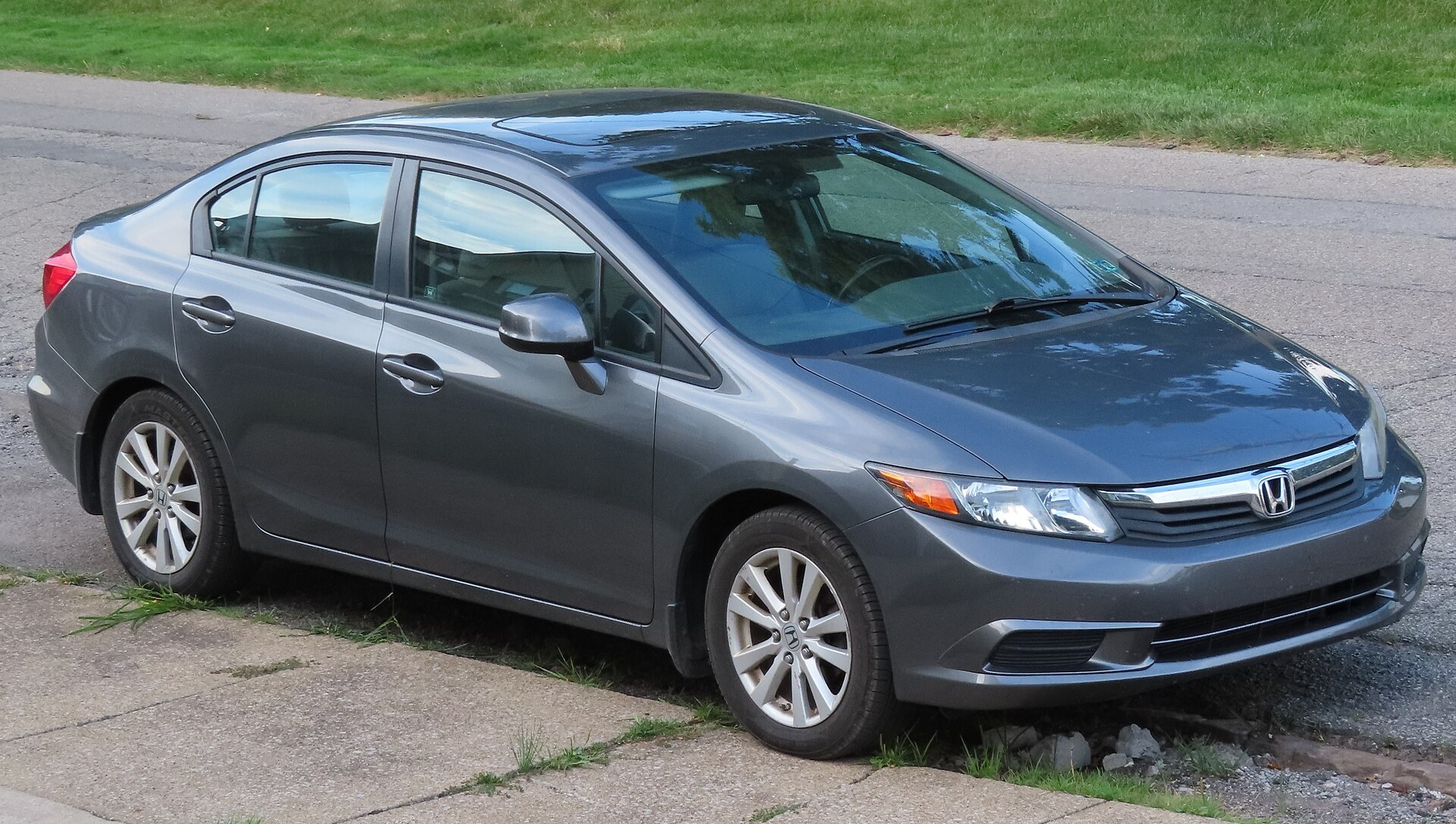
Honda has recalled 810,592 vehicles in the United States over Takata front airbag inflators that can rupture in a crash. The recall, filed with the National Highway Traffic Safety Administration (NHTSA) as campaign 26V-765 on November 19, 2026 and confirmed November 23, 2026, covers select 2012–2013 Honda and Acura models originally sold or ever registered in hot, humid states. The fix is free — but first, check your VIN.
What Was Recalled

The recall covers 810,592 U.S. vehicles fitted with Takata front driver and/or passenger airbag inflators.
| Model | Vehicles |
|---|---|
| Honda Civic 2012–2013 | 413,125 |
| Honda CR-V 2012–2013 | 197,045 |
| Honda Accord 2013 | 165,225 |
| Acura RDX 2013 | 20,554 |
| Acura ILX 2013 | 14,643 |
| Total | 810,592 |
Honda’s recall codes for this campaign are BQK, MQJ, KQI, and QQH. Only vehicles originally sold or ever registered in 14 hot and humid states and territories are included: Alabama, California, Florida, Georgia, Hawaii, Louisiana, Mississippi, South Carolina, Texas, Puerto Rico, U.S. Virgin Islands, Northern Mariana Islands, Guam, and American Samoa.
Why the Inflators Fail

The problem is the propellant inside the Takata inflators. After long-term exposure to high heat and humidity — and repeated temperature swings — the propellant can degrade. In a crash, a degraded inflator can rupture instead of deploying normally, sending metal fragments into the cabin. That is why this recall is limited to cars from hot, humid climates: heat and moisture are what break the propellant down over time. Honda has described this filing as preventative — no ruptures, injuries, or deaths have been tied to this specific recall.
Is Your Car Affected? How to Check Your VIN
Do not guess from the model list alone — check your VIN. It takes about 30 seconds:
- Find your VIN — on the driver’s-side dashboard (visible through the windshield), on the driver’s door jamb sticker, or on your registration and insurance documents.
- Check it at NHTSA: go to NHTSA.gov/recalls and enter your 17-digit VIN.
- Check it with Honda or Acura directly: recalls.honda.com for Honda owners, recalls.acura.com for Acura owners.
- Or call: Honda customer service at 1-888-234-2138, or the NHTSA hotline at 1-888-327-4236.
If your car is included, the lookup will show recall campaign 26V-765 (Honda codes BQK, MQJ, KQI, or QQH). If it shows nothing, your vehicle is not part of this filing — but it is still worth checking again if you move to or from one of the 14 listed states or territories, since eligibility follows where the car was sold or ever registered.
What Happens Next
Honda will send interim owner notification letters, expected December 18, 2026. The repair is free: a dealer will replace the front driver and/or passenger airbag inflator at no cost to you. Parts may take time — with more than 800,000 vehicles involved, replacement inflators may not be immediately available for every car. Your dealer can confirm timing and book the repair once parts arrive. Do not wait for the letter: if your VIN check shows your car is affected, contact your dealer now to get in the queue. Keep driving carefully in the meantime — Honda has reported no ruptures tied to this filing, but an affected inflator should be replaced as soon as possible.
The Bigger Takata Picture

This is the latest chapter in the largest auto recall in history. Takata airbag inflators have been recalled across dozens of brands over the past decade, with tens of millions of vehicles affected worldwide. The root cause is the same every time: ammonium-nitrate propellant that degrades in heat and humidity. As reported, Toyota has also expanded its own Takata recall by 314,029 U.S. vehicles — a separate action from Honda’s filing, presented here as reported and not confirmed by NHTSA in the Honda campaign. The pattern is the same: older cars, hot climates, and inflators that age badly. If you own any car from the early 2010s — Honda or not — a VIN check is worth 30 seconds of your time. Recalls like this one are exactly why the check exists.
If your data has been exposed anywhere online, here is how to check whether your passwords leaked in the 3.5-billion-record breach. Honda is not the only brand making big moves — Apple is redesigning the camera on the iPhone 18e for 2027.
Bottom line: Honda recalled 810,592 cars (2012–2013 Civic and CR-V, 2013 Accord, RDX, and ILX) over Takata airbag inflators that can rupture after years in heat and humidity. No ruptures or injuries are tied to this filing, the fix is a free dealer replacement, and interim owner letters go out December 18, 2026. Check your VIN now at NHTSA.gov/recalls or recalls.honda.com — it takes 30 seconds.
Sources
NHTSA recall campaign 26V-765 — NHTSA.gov/recalls; Honda recall lookup — recalls.honda.com; Acura recall lookup — recalls.acura.com
Reporting status checked November 24, 2026. Campaign 26V-765 was filed November 19, 2026 and confirmed November 23, 2026; the Toyota expansion figure is reported, not confirmed in the Honda filing.
Don’t stop here. Explore more stories from The Immortal Times.





Leave a Reply
You must be logged in to post a comment.